



Video Games Score Big in France
By Mark Seavy
There has been a changing of the guard in France as gaming increasingly replaces anime as a focus for licensing.
And while anime and manga remain extremely popular across France (the country is second only to Japan for sales), many of those brands are being reclaimed by core fans as mainstream consumers shift their focus to gaming, according to licensing executives.
The popularity of anime in the region peaked about two years ago amid a surge led by demand for Toei Animation’s One Piece, Shueisha’s Naruto, Aniplex’s Demon Slayer, and others. And while One Piece’s release on Netflix in France in August 2023 sparked renewed interest in the genre, the demand ebbed as the market became saturated with titles, a pattern that has also been seen in the U.S.
In the place of anime as a top draw for licensing in France is gaming, including Microsoft’s Minecraft, Supercell’s Brawl Stars (Aventure Diffusion is among the licensees for slippers), and franchises like Pokémon and Super Mario, said Aurélie Passot, a former Viacom executive and founder of the consulting firm Lapassote, who spoke at the recent France Licensing Day in Paris. At the same time, interest in preschool IPs has slowed as French children take up video games starting as early as five years old, she said.
“Anime is still there but gaming is stronger,” said Passot. “There were so many different anime titles at the same time it was difficult to keep up. Gaming is following the same path that anime did in France five years ago. Anime then was for core fans and, step by step, it became mainstream. Gaming is following the same path and will replace anime [as a top licensing IP in France] in the coming year.”
This shift follows a year in which sales of licensed goods in France topped $8 billion for the first time in 2025 in a global market that rose 5.45% to reach $389.8 billion. At the same time, data from Circana showed that sales of licensed toys in Europe rose 14% and account for 31% of total toys sales in the region.
The rise in sales of licensed products also comes as demand for sports-related goods has become as much a fashion statement or lifestyle choice as it is a team allegiance, licensing executives said.
For example, Paris Saint-Germain (PSG)—which won the Union of European Football Associations title for the 2025-2026 season—has become top fodder for licensing in the region under a 10-year licensing deal with Fanatics and with a portfolio of 1,000 licensees. The club also franchises its name and proprietary coaching techniques to operate licensed soccer training academies in international markets, including the U.S.
And motorsports like the Formula 1 racing circuit have captured consumer attention in France, though demand for National Hockey League (NHL) and National Basketball Association (NBA) licensed apparel peaked two years ago and has since slowed, Passot said.
“The popularity of soccer has become a lifestyle brand in France and the players themselves have become influencers on social media,” said Passot. “It is now not only about practicing a sport but being part of and engaging with a community.”
Nostalgia-driven brands have also proven popular in the region, but with the definition changing slightly. In the past, 10-15 years was the typical age at which an IP could be deemed nostalgic, but that has shrunk to five years as the onslaught of the internet and streaming content has sped up the life cycle, licensing executives said.
That faster turnaround has also forced retailers to adapt to a larger quantity of shorter-lived trends. For example, many retailers in France are addressing the trend cycle through pop-ups featuring IP brands.
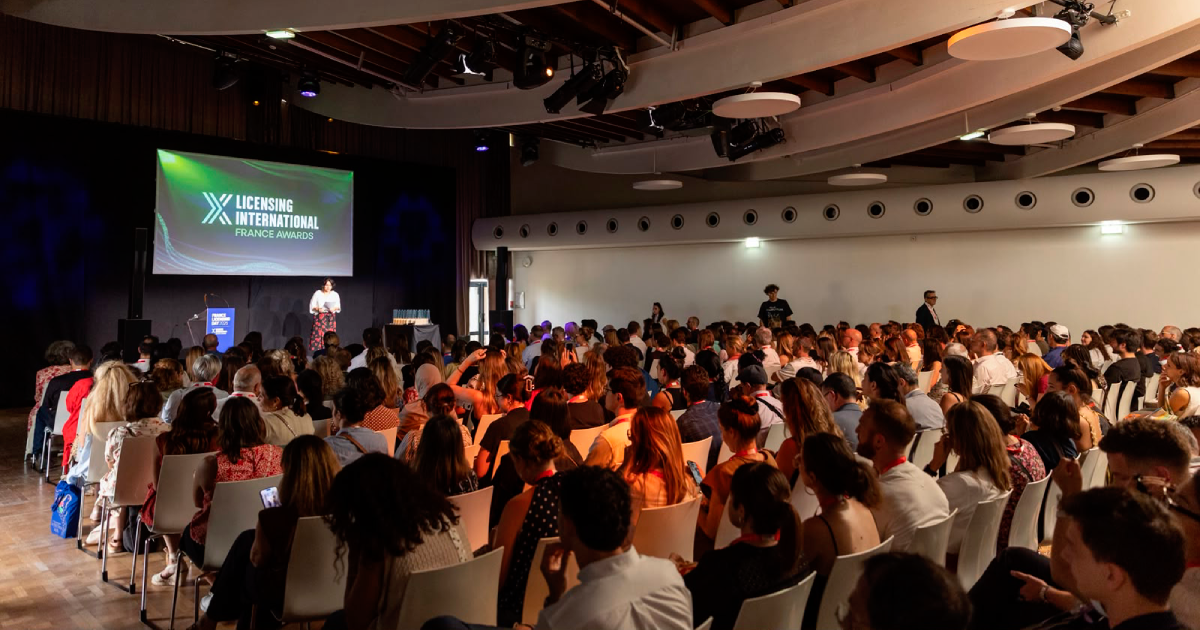
Carrefour, which operates 14,000 stores globally (including 6,000 in France) in a network of hypermarkets, traditional supermarkets, and convenience stores, provided attendees at France Licensing Day with insights into its licensing strategy, including how the company organizes its teams as well as how it decides which brands to carry and which licensees to work with.
Other retailers deploying licensing strategies across France are E.Leclerc (750 stores in the region), Intermarché (2,100), Auchan (687), and Systeme U (1,500) as well as toy specialty chains like JoueClub (300), King Jouet (332), and La Grande Récré (103).
“It is all about trends and the fans, and retailers are following them,” a licensing executive said. “A lot of retailers over-ordered in late 2025 and early this year, so now they have excess inventory and are trying to mitigate this by lowering the amount that they are ordering as they seek to offset lower consumer demand.”