



How Micro-IPs Are Driving Product at Speed
An Executive Voices Blog by Suridh Hassan, Founder of Stickerbomb World and Co-Founder of Soi Books
For a long time, licensing followed a familiar pattern. A large IP proved itself in one medium (like film, television, or publishing), built scale, and then slowly extended into consumer products. Timelines were long, gatekeeping was heavy, and permission came before proof.
That model still exists. But, alongside it, something quieter and faster has taken hold—the rise of the micro-IP.
A micro-IP is not a smaller version of a traditional franchise. It is a focused, recognisable creative property that lives close to its audience. It might be a single character, a visual language, a repeatable motif, or an individual artist’s world. What matters is not lore or backstory, but clarity.
A useful reference point is the early phase of KAWS’ Companion. Before it became a global art brand, it operated like a micro-IP—a highly recognisable form that moved quickly across vinyl, apparel, prints, and collaborations. The power came from clarity rather than scale, making it easy to extend across products without over-engineering.
Micro-IPs are usually born on social platforms, inside subcultures, or through tight communities rather than mass media. They grow through repetition and resonance, not reach. People recognise them quickly and want to own them in tangible ways.
In fact, an illustrator, a sticker artist, or a niche street character can function as a micro-IP in their own right. The artist is not just a contributor; they are the property. This isn’t influencer merchandise or personal branding, however. A micro-IP is repeatable IP logic—something that can move beyond a single post or moment and live across products and contexts.
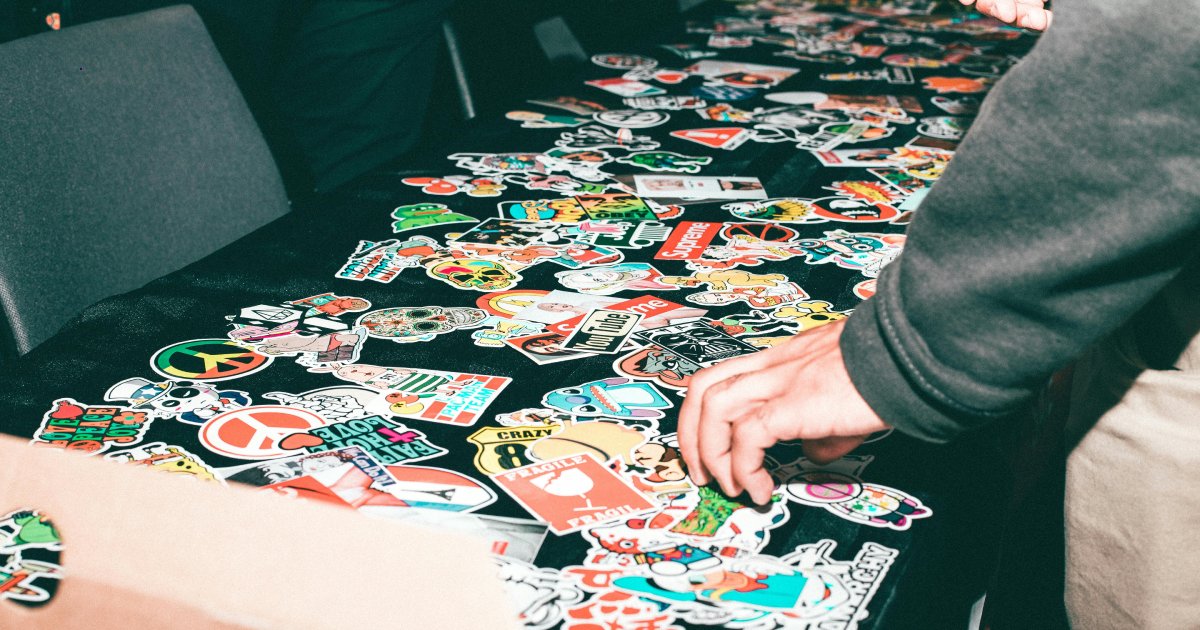
You can see this everywhere if you know where to look. It can include independent illustrators selling out short apparel runs; sticker artists whose characters move from vinyl to notebooks to phone wallpapers in months, not years; or digital sticker packs that become physical products once demand is visible.
These aren’t accidents. They’re proof-led ecosystems. The audience shows up first and then the products follow. Spotting a viable micro-IP early means watching for sustained engagement, resisting over-engineering, and knowing when to add structure and when to stay out of the way.
Why do micro-IPs work so well in the world of brand licensing? The main advantage is speed.
Micro-IPs don’t need long approval chains or heavy world-building. They can move from idea to SKU quickly, allowing licensors and licensees to test, learn, and iterate without overcommitting. This is, in part, because a strong micro-IP doesn’t produce one hero product. Instead, it produces a cluster of products—apparel for visibility, stationery for daily use, and digital stickers for constant presence. Each plays a role without stretching the idea too far.
Additionally, collaboration in the world of micro-IPs is more direct due to fewer layers and tighter ownership. As a result, decisions happen faster and the work stays authentic. This is something that audiences notice.
Some categories are naturally aligned with this model. Apparel, for example, is expressive and fast. Stationery feels personal and rewards recognition. Digital stickers and assets are often the entry point, because they are cheap to produce and easy to spread. These formats are also good fits because they let the IP stay small and sharp.
Micro-IPs come with challenges, however.
One of the most significant challenges, from a brand licensing perspective, is the fact that rights can be unclear. Additionally, what works for a thousand fans may not hold at scale. And speed, if unmanaged, can lead to burnout or inconsistency. Chasing speed without coherence, meanwhile, risks diluting the very clarity that makes a micro-IP work.
There’s also a mindset shift that is required to effectively grow a mirco-IP. Traditional licensing teams are used to polished decks and forecasts, but micro-IPs arrive messier. The proof lives in engagement, interaction, and organic reposting, not reports. The key is making that shift is to change what counts as evidence.
Licensing no longer starts with permission, for example, it starts with proof. Engagement, repeat buyers, and cultural presence matter as much as reach. Additionally, professionals who succeed in the world of micro-IPs act more like collaborators than gatekeepers. They help artists structure IP, protect it, and extend it responsibly without slowing it down. Because, with micro-IPs, you are no longer just scaling the property—you are helping shape it. Your role will increasingly be to act as infrastructure, building the rails that allow micro-IPs to travel further without losing their edge.
Of course, micro-IPs aren’t replacing big brands. They’re filling the space between culture and commerce that large franchises can’t reach quickly. Smaller IPs travel faster and, in a market that often rewards relevance over reach, speed is no longer a nice-to-have. It is the strategy.
Stickerbomb World is a global platform supporting graffiti, illustration, street art, and outsider art through the publication of sticker art books.
Soi Books produces a diverse range of urban art, design, and photography publications that are distributed globally. The company collaborates with a community of up-and-coming global artists and services them with creative solutions.