




Toymakers Have an Appetite for Food and Beverage Brands
By Mark Seavy
The combination of kidults and younger, social media-driven consumers is bringing food and beverage brands well outside the grocery aisle.
And while the licensing of those brands has long been part of the marketing strategy of many consumer products goods (CPG) companies, the growing focus on the toy category, in particular, was on full display at the recent New York Toy Fair.
The expansion of food and beverage labels outside the more typical ingredients licensing comes as CPG companies have become an unlikely source for pop culture and social media moments. For example, many young consumers are discovering (and subsequently posting about) nostalgic food brands on social media platforms like TikTok and YouTube. This transition is also in response to kidults who are more interested in collecting than consuming.
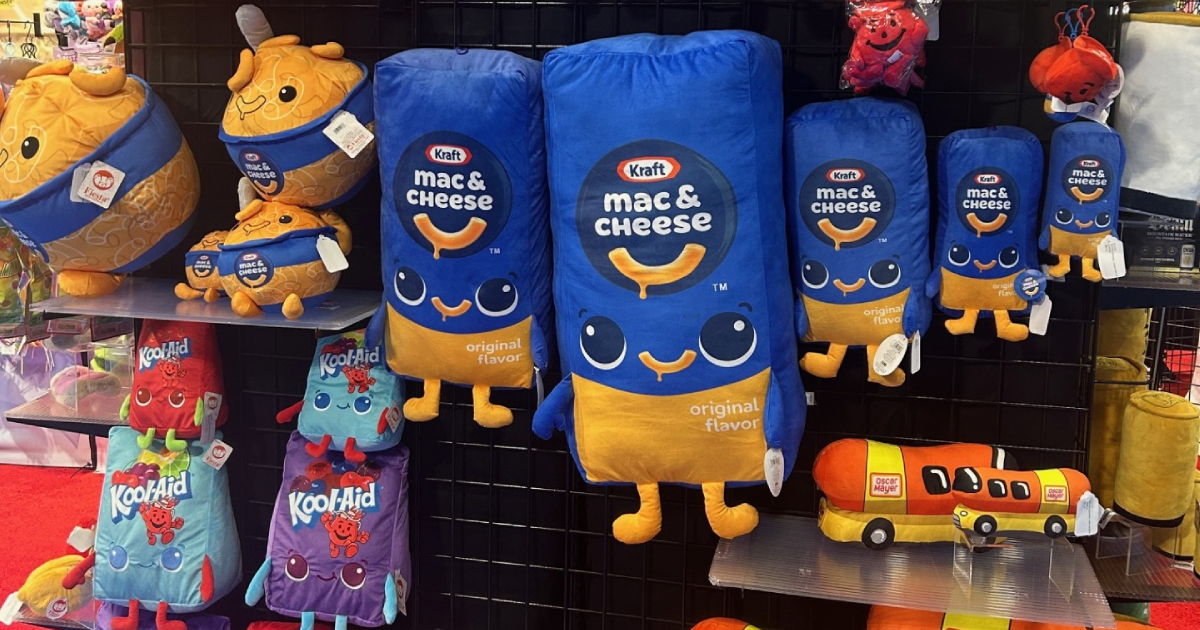
Kraft Heinz’s Oscar Meyer Wienermobile, for example, was first introduced as a 13-foot vehicle by its namesake company in 1936. But Fiesta Toys, which largely sells through amusement parks and entertainment/restaurant chains like Dave & Busters and Chuck E. Cheese, refashioned the vehicle as an 18-inch plush. Fiesta is also planning to extend the Kraft plush license to include Jiff, Uncrustables, and Smucker’s brands.
Fiesta also recently signed an agreement for J&J Snack Foods’ ICEE fruit and carbonated soda label that will be launched in plush in 2027, Fiesta Toys President Coral Reynolds said. Fiesta is also considering co-branding with its own plush labels, including Shoulder Sitters, Earth Pals, and Snugglies, she said.
And Kraft’s Kool-Aid, which was created in powder form in 1927, is available in plush sizes up to 18 inches and as squish toys developed by Incredible Group’s Incredible Play division, which has similar products under the Oscar Meyer, Jell-O, and Jet-Puffed labels.
WK Kellogg Co., meanwhile, has licensed its brands to a variety of companies, including Funko. The collectibles company has launched, among other items, a six-inch plush Fruit Loops box and a vinyl figure of the cereal brand’s mascot Toucan Sam.
Then there is the case of Liquid Death, the canned sparkling water and energy drink brand, which las year partnered with Fiesta to launch a plush version of its water can.
“There is more of a consumer for these products now and the whole kidult category is driving these sales where, before, we never really looked at it,” Reynolds said. “Many of the young consumers may not know what the Wienermobile is but their parents do and they are the ones paying for it. With younger consumers, they are finding these brands on social media, and it is different generations looking at things in a different way. That makes some of these brands more prominent now they ever have been.”
That growing prominence is also extending to brands that, while not in the food and beverage category, are closely associated with many of these IPs.
Chuck E. Cheese, for example, opened 10 Chuck’s Arcade locations last year across malls in the U.S. The arcades don’t sell food or beverages, but parent company CEC Entertainment also operates 475 restaurants. Similarly, Dave & Buster’s operates 183 restaurants/arcades in the U.S. (178), Canada (2), Puerto Rico (2), and the Philippines (1).
“Licensors are increasingly looking beyond the food aisle to extend brand affinity, meet consumers in spaces they already frequent, and build deeper connections through new experiences,” said Kyle Lerner, Licensing Director at Brand Central, which represents Kraft Heinz. “Food and beverage brands are becoming part of pop culture and the ability to surprise and delight consumers with collaborations, mash up flavors, and innovative licenses has become part of their [CPG companies] marketing and innovation pipelines.”
Yet those pipelines could narrow because of tariffs, licensing executives said. Nearly all of Fiesta products are produced in China, which, with 30% tariffs, forced the company to impose a 14% surcharge last year on retail orders. The added costs resulted in retail prices increasing 20-25%, Reynolds said. As a result of the tariffs, Fiesta narrowed its line for 2026, shrinking its product catalog to 223 pages from 250 pages the previous year. A Fiesta competitor, Rhode Island Novelty, also added a 14% surcharge last year.
“We can’t afford to be everything to everybody now because of the tariffs,” Reynolds said. “With tariffs and increased minimums, it is leading us to be more particular about the [product] lines we bring in.”