




Eyewear Industry Focuses on Licensing
By Mark Seavy
With eyewear increasingly seen as being as important for fashion as it is for vision, brand licensing is growing in market share in the category.
Licensing has long been a focus of the business, having expanded to account for approximately 80% of annual sales across the category since industry giant Essilor, now EssilorLuxottica, signed its precedent-setting deal with Giorgio Armani in 1988.
But with yet another merger (Essilor and Luxottica combined in 2018) completed last year when VSP Vision’s Marchon acquired Marcolin, the eyewear business is poised for the emergence of another licensing giant.
At stake is a global market (eyeglasses, sunglasses, and contacts) that is forecast to reach $156 billion in revenue this year and increase 3.27% annually through 2030, according to Statista. The largest segment is spectacle lenses ($64.4 billion this year) with the U.S. alone generating $38 billion. Global annual unit volume is projected to hit 10.3 billion pieces by 2030.
Within the eyewear market, Marcolin has upwards of 25 licensed brands (including Tom Ford, Max Mara, Abercrombie & Fitch, Rag & Bone, and others), while Marchon has 21 (including Columbia, Canada Goose, Lacoste, Karl Lagerfeld, and more). The two companies will complete integration in 2027 and, for the time being, are operating independently, said Christina Cappelluzzo, Northeast Regional Sales Manager at Marchon.
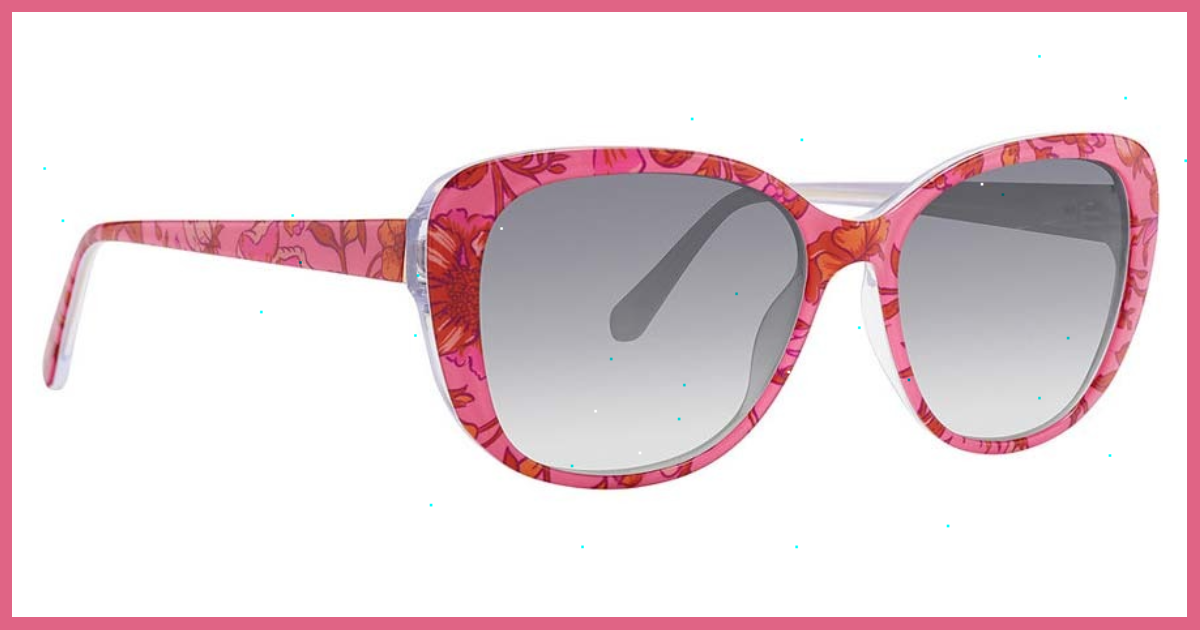
That consolidation doesn’t include a host of other companies, like Coral Eyewear (Crayola, Paddington, Umbro) and The McGee Group (Life is Good, Trina Turk, Vera Bradley). And there are also a host of smaller independents, such as Aerial Vision (Briko, skiing) and Lotto (for the sports of padel and pickleball), the latter having recently launched sales through Dick’s Sporting Goods.
With the sheer number of licensed brands available, the industry has become reliant on storytelling to connect with consumers as well as appealing to fans of the IPs themselves.
At Marcolin, consumers buying Tom Ford eyeglasses can become converts to the brand’s suits, said JoAnna Palumbo, Brand Specialist for the Rag & Bone and Max Mara brands at Marcolin. The company also segments its brands, with chains like Costco getting exclusive products under the Guess and Max Mara labels.
Eyewear supplier Vanni Occhiali, meanwhile, co-develops limited-edition sunglasses with fashion designer Kristina Ti and artists like Catalin Pislaru in batches of 100-500 units depending on the “salability” of the products, said Vanni CEO Giovanni Vitaloni. The goal is to merge Vanni’s methodical approach to developing and manufacturing glasses with artists’ more adventurous designs, Vitaloni said.
And being able to tell your story effectively is crucial to resonate with younger consumers, he said, whether the focus is on collaborating with unique artists or creating offerings that are sustainable.
“We are very transparent about where the brand is manufactured [in Italy] and what is going on behind the scenes,” Vitaloni said. “It is better for us to spend a little more for something that has nice quality and low impact on the environment instead of buying something that may be cheaper but someone else is paying the price.”
Indeed, many companies seeking to appeal to younger consumers are increasingly relying on environmental credentials.
The Italian firm L.R.G., for example, has developed four generations of sunglasses with music producer Christian Rich, including new models introduced in December that replace plastic fames with those made from an acetate cellulose (wood, cotton) that is renewable.
L.R.G. also sources mineral glass for its lenses that are designed to boost optical clarity, provide scratch resistance, and offer 100% UV protection but add only about $100 to models that sell for $600, said Tommaso Sanfelice Di Monteforte, Sales Director at L.G.R.
And Giorgio Nannini, which sells eyewear under the Agusta brand, also uses HD acetate (wood pulp, cotton) for frames, Sales Director Stefano Rondanini said.
“It is all about appealing to the consumer preferences and that could be a brand, the environment, or both,” said Palumbo.