




Ducks Make a Splash in Licensing
By Mark Seavy
Across toys, apparel, shower curtains, and more, rubber ducks have long been popular with consumers. But recently they have been making a splash in licensing.
At Licensing Expo in May, no less than four brands—Twin Tiger USA’s Duck-Y, Rubber Road’s TUBBZ, Semk Holdings’ B.Duck, and Ducks Unlimited—took booth space at the tradeshow, each with a slightly different take on what has become yet another addition to the collectibles landscape.
In many cases, these ducks are a variation of traditional versions. TUBBZ from Rubber Roads, for example, has assembled a rubber duck collection using Universal Studios, Scott Games, Warner Bros. Sega, Lionsgate, Paramount, and Mojang (Minecraft) IPs.
Twin Tiger, in contrast, has a stable of 400 internal duck designs that are emblazoned across trucker caps ($19.99), t-shirts ($29.99), hoodies ($59.99), lanyards, stickers, and silicone bracelets. These products are sold through convenience stores, including 3,000 Circle K locations. That has since given way to a licensing program for the designs with Firefly Brand Management that landed a deal with JCorp Inc. for an apparel capsule collection that has launched at Walmart in Canada.
The conservation group Ducks Unlimited, meanwhile, signed an agreement with Art Brand Studio’s Wild Wing wildlife art publisher to produce limited-edition prints, exclusive collections, and wall décor. And Germany’s Schnabels has a collection of rubber ducks featuring themed outfits and professions ranging from brewers and pilots to mermaids and grandparents, each priced between $7-$11.
“It [the duck trend] really brings nostalgia to people for all ages, demographics, and interests,” said Troy Coppock, who co-founded Twin Tiger with his twin brother, Rory, and has a stable of other brands including Portec, Twin Palms, Nikita Sing, and others. “But it is the designs that will sell the ducks and that’s where characters, art, and IPs come into play and makes them unique [to collectors].”
In addition to catching the attention of consumers, the growing trend has also attracted retailers.
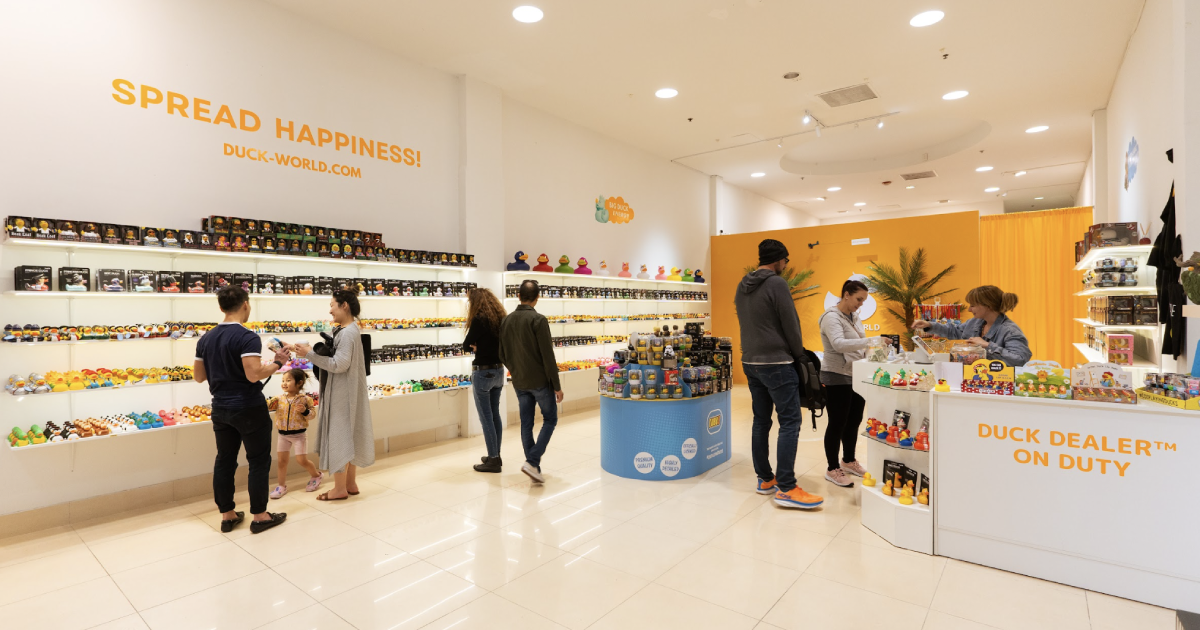
Duck World has five stores in the U.K. and opened its first 1,500-square-foot U.S. location in Miami Beach, FL in 2024, which contains 800 unique designs. The retailer also recently launched a collection of 1,000 ducks each for DC Thomson & Co.’s Beano Dennis the Menace and Gnasher characters ($34). Then there is the Chatham, MA-based Ducks in the Window, which boasts 1,000 styles including 10-inch versions ($45) replete with a sailor cap or Nantucket straw bonnet as well as a 1.5-inch Minecraft ($8.99) offering and Schnabel’s 3.25-inch F1 driver ($10.99).
This revival at retail (and the growing focus on branded offerings) is the latest chapter in the rubber duck’s long history of popularity with consumers.
Toy ducks first appeared in the late 1800s after Charles Goodyear patented vulcanized rubber in 1844. That gave way to Seiberling Latex Products working with Disney on Donald and Donna (later Daisy) Duck “bath floater” toys in 1938. Then, a vinyl version was created by sculptor Peter Ganine in 1947 that sold 50 million units. The capstone was Sesame Street’s Ernie singing the “Rubber Duckie” song in 1970 that reached number 11 on the Billboard chart the following year.
The most recent round of fascination took hold on social media during the pandemic when Canada’s Allison Parliament placed a rubber duck with “Nice Jeep” written on it on a Jeep Wrangler in July 2020. The gesture was posted on Instagram under #DuckDuckJeep, a hashtag that resonated with Jeep owners and gave birth to Facebook group that had 10,000 followers by September 2020 and has since increased to 114,100 followers. Consumers’ depth of interest in rubber ducks is perhaps best illustrated by Seattle, WA’s Charlotte Lee, a professor in the University of Washington’s Human Centered Design and Engineering Department, who has 9,951 of them.
By launching licensed versions, companies can provide a point of difference for collectors while also connecting with fans of those IPs that might otherwise not have purchased a rubber duck.
“Few characters are as instantly recognizable and beloved as Dennis the Menace and Gnasher,” Duck World Co-Founder Irina Fedotova said, explaining the genesis of the recent collection. “For generations they have been at the heart of British childhoods, bringing humor, mischief, and adventure to millions of readers, creating a ready-made audience for the ducks.”