


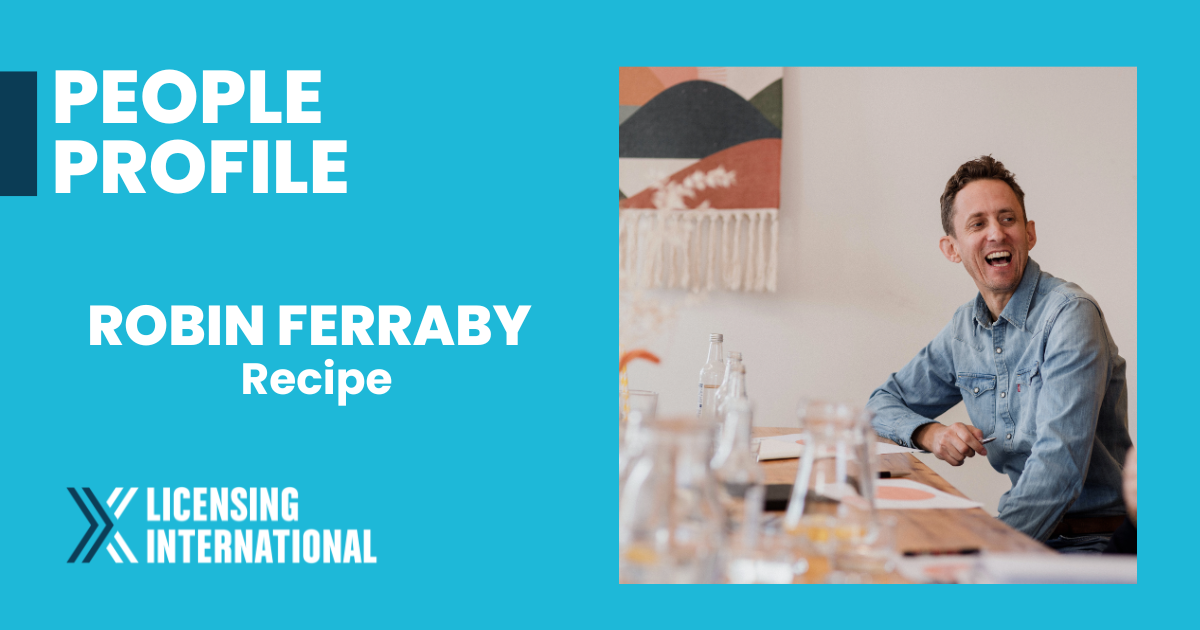
People Profile: Robin Ferraby, Planning Director at Recipe
The global licensing community is powered by an incredible group of professionals whose diverse backgrounds and creative energy drive innovation and excellence. Each week we profile one of these professionals in this ongoing series.
How did you get into licensing (or how did licensing find you)?
Licensing found me, through brand and product design rather than the deal side. At Recipe, we focus on making brands more meaningful, and the projects where that mattered most kept turning out to be licensed brands. We brought Braun’s audio range back to life decades after it had left the market and have worked with a number of licensors and licensees since. Coming from Panasonic and DeLonghi before Recipe, I’ve always looked at licensing through a consumer and innovation lens, and I still do. I’m rapidly finding that the licensing industry is heavily populated with very good people!
What’s a “typical” day in your current position?
Typically working with people most of the time, either building a vision for a direction or taking care the details aren’t missed. Most days I move between two worlds; the strategic conversation with a brand owner about where their brand could credibly go next and stitching together the craft of making it real—in story, assets, and product. We’re a fully remote senior collective, which works really well, agnostic to geography (and to a certain extent time zones…), but we’ll meet up as a team regularly and those sessions are really rich.
What’s your biggest personal or professional accomplishment?
Professionally, the early category-strategy groundwork I helped lay at the De’Longhi group, which fed the thinking behind a major household brand-licensing move. Personally? Just about keeping my head above water while chasing after three children, which is a growth strategy of an altogether different kind.
What are the most significant trends or changes that you’ve seen in the business in recent years?
I’ve observed corporate brand licensing thinking like brand building rather than asset management. There is real appetite for storytelling, consumer emotion, and genuine growth. Pressure on core businesses is pushing brand owners to treat licensing as a serious route to new consumer moments, not a side revenue line. And AI is changing the process underneath, from how performance is tracked to how quickly we can explore an idea.
What keeps you up at night? What’s your biggest challenge these days?
What nags at me is unrealised potential. A great licensed brand is a bit like a hugely talented friend who never quite gets the chance to shine, and I find that genuinely hard to let lie. So much value is left on the table when a brand is licensed and the growth is treated as an afterthought. The challenge, and the fun, is coaxing the whole chain—licensor, agent, and licensee—to believe in the bigger picture and then hold their nerve through all the contracts and approvals. When it works, the brand grows rather than simply getting used.
In your opinion, what is the top skill every licensing executive should have in order to succeed?
The ability to hold two things at once: deep respect for the brand and restless curiosity about where it could go. Plenty of people can protect a brand, and plenty can chase revenue. The rarer skill is spotting the next step that is genuinely true to the brand and commercially real, then having the conviction to make it happen well. Vitality and vision, in equal measure.
What’s the best piece of advice you’ve ever received, or what’s your favorite quote?
“Don’t keep in your back pocket what you can use today,” which speaks to seizing the moment and not waiting for perfect conditions. I remember a commercial lead saying that one day in a meeting and it really struck me as a practical principle.
What is your favorite licensing deal of all time? (It doesn’t have to be one that was signed by you.)
For me it has to be LEGO and Star Wars. It was LEGO’s first licensed theme back in 1999, and it helped rescue and reinvent the company, which tells you how much a single partnership can matter. What I love is that it never feels like one brand borrowing another’s fame. Both come out bigger: Star Wars finds a way onto every living room floor, and LEGO gains stories and characters that give the bricks real meaning. It is creativity inside clever guardrails, it works for a five-year-old and a 50-year-old alike, and more than 25 on it is still going strong. That, to me, is licensing at its best: meaningful, brave, and commercial all at once. It is also responsible for a worrying amount of my own floor space.
If you weren’t in licensing, what would you be doing now?
Cooking up a corporate strategy. I love the strategic side of growth and seeing the small steps through that stack up into something real.
The last licensed product I bought was…
A whole range of characters for our tonies box, from Moana, to Stitch, to Frozen, etc. A great product centred around child play, and without a screen!