



Retailers Sell an Experience
By Mark Seavy
As consumer demand for experiences continues to grow, retailers are increasingly focused on being immersive as much as they are on sales.
That does not mean sales have declined in importance. Retailers cannot remain in business without them. It is more about appealing to internet- and social media-first consumers seeking a tactile experience.
As a result, the stores themselves are being treated as media. A physical location doubles as a content studio and data-collection point. And with these changes, the store design for experiences is being taken out of visual merchandising and placed under marketing and analytics. And while retailers frequently weave experiences into their remodels, it can also be accomplished with modular pop-ups, in-store events, and seasonal product refreshes.
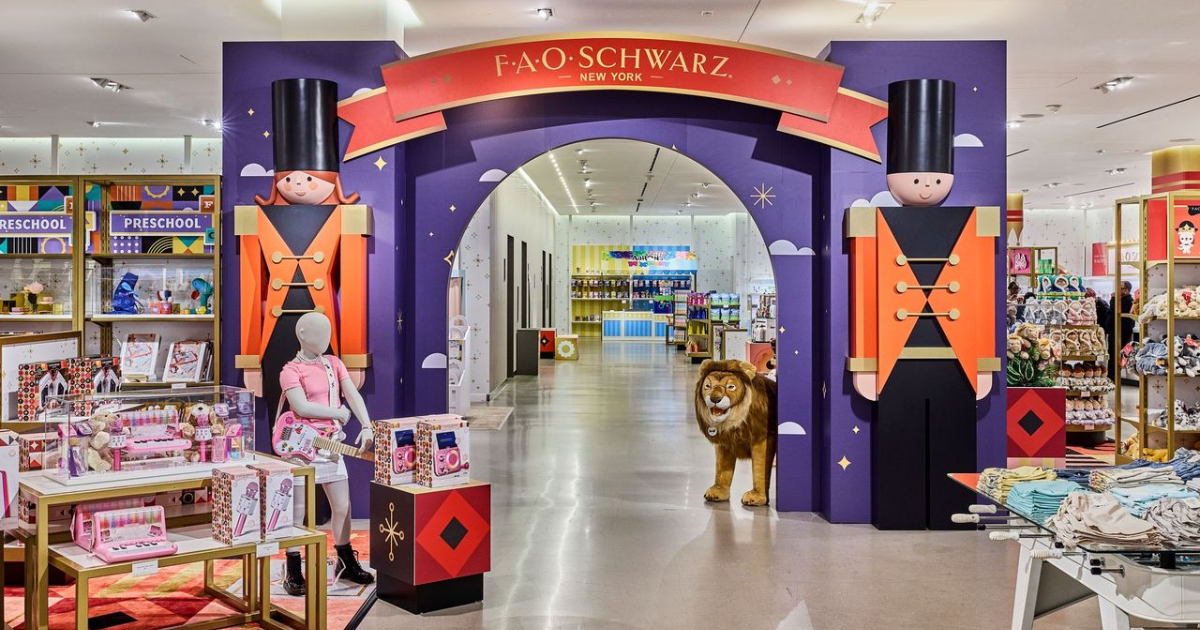
The department store chain Nordstrom, for example, is better known for its fashion than for toys. Yet the 412-store operator recently partnered with licensee ThreeSixty Group’s FAO Schwarz to bring a toy assortment to eight locations. That includes a 5,000-square-foot “Jewel Box” in New York that opened this month, which mirrors on a smaller scale a strategy deployed at Selfridges in London, U.K. and at Arnotts in Dublin, Ireland. The seven additional Jewel Boxes will each be 1,000 square feet.
The trend is not limited to the toy space, however. Beauty has always been an advanced category for experiential retail, with personalization and service driving a premium and setting a tone for other sections of the store.
Target, in replacing the former in-store Ulta format, has deployed a Beauty Studio concept in 600 locations replete with “ambassadors,” said Target Chief Merchandising Officer Carla Sylvester.
At the same time, Target has overhauled its stores. It made layout changes to more than 2,000 locations that encompassed nearly half its grocery assortment and reimagined its “Fun101” section in combining trading cards with pop culture items, Sylvester said. Target also replaced nearly 75% of its decorative accessories in the home goods department and expanded its assortment of LEGO products, sales of which increased 30% from a year ago in Q2.
“These moments do far more for us than creating short-term buzz. These moments attract new guests, deepen our relevance, and reinforce Target’s role in culture,” CEO Michael Fiddelke said. Additionally, the chain is using limited-time partnerships, like recent ones with Pokémon and women’s lifestyle and travel-inspire clothing supplier LoveShackFancy, to “reinforce Target as the destination for what’s new, on trend, and culturally relevant.”
For its part, Walmart has revamped its beauty department in hiring store associates to specialize in the category at 425 of its 4,598 U.S. locations. The associates are trained at one of 200 Walmart locations and take courses like Beauty 101 and Consumer Engagement 101. Walmart tested the strategy at 22 locations in Arkansas and Texas during the past year before expanding the format.
Then there is Glossier, which started as a direct-to-consumer beauty brand but opened a flagship store in New York in 2023. The store targets Millennials and Gen Z consumers that are drawn by the company’s social media, which features consumer-generated content. Many of these customers wait in lines to get into the store, often less focused on buying products and more excited to experience the brand. Glossier plans to open as many as 12 more stores over the next two years.
And mattress supplier Casper opened the “Dreamery” in New York not to sell products, although the store does generate revenue, but rather to provide an on-brand and in-person experience. The store is filled with sleeping pods stocked with Casper mattresses, with consumers paying $25 for a 45-minute session.
“The key takeaway is if you focus on creating an experience that engages with customers, and you sell quality products with friendly and approachable service, the customers will respond incredibly well—with their loyalty and their buying power,” a licensing executive said.