Private Label Goods Gain Ground
By Mark Seavy
While the popularity of private label products has long run in cycles with retailers and consumers alike, they are now gaining serious staying power.
And while that status is not new, given that they account for 21.3% of U.S. dollar sales and 23.5% of the unit volume, it raises the question of whether they are impinging on licensed goods.
For the most part, licensing executives do not believe private labels have impacted sales of licensed brands but concede that private labels have gained ground with consumers. Sales or private label brands increased 3.3% in 2025 (nearly triple the growth of national labels) to reach $282.8 billion, while units rose to $68.7 billion, both new records, according to the Private Label Manufacturing Association (PLMA).
More importantly, 36% of consumers said they prefer private label or store brands over national labels, up from 29% in September 2025, according to research firm PDG Insights. And among consumers in the 35-to-44-year-old age range, a key demographic, 54% prefer store brands and 60% are buying more than last year with 48% replacing national brands, according to PDG Insights. More than 80% of those shoppers surveyed said store brands influenced their choice of retailers and 42% of them find the products through shelf packaging.
And retailers are taking notice of the shift.
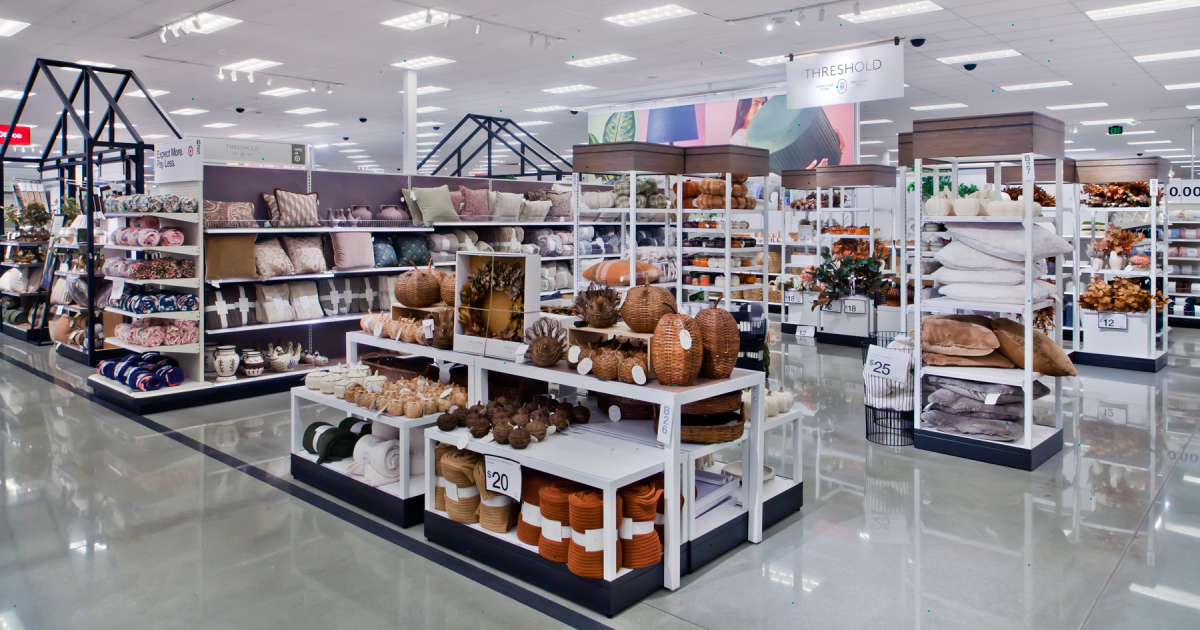
Target recently overhauled its 13-year-old Threshold brand, which generates about $3 billion in annual sales, across home goods in introducing 800 new items. Private label accounts for 17% of Target’s annual sales. The relaunch of Threshold came as Target replaced 75% of its product assortment in home goods, Chief Merchandising Officer Cara Sylvester said.
And rival Walmart recently took out a building-sized ad a short distance from the Macy’s store in New York’s Herald Square to promote its Scoop apparel brand. The label started out as a Walmart detergent brand in 2005 and moved into clothing 14 years later after the mass retailer acquired brand rights to Scoop NYC, a New York fashion boutique that ended a 20-year run by closing in 2016.
Among retailers, Trader Joe’s leads the way with private label representing 82% of annual revenue, followed by Aldi (78%), Dollar Tree (37%), Sam’s Club (33%), Tractor Supply (32%), Costco (31%), Walmart (26%), Home Depot. (22%), and Lowe’s (22%), according to research firm Numerator.
In many cases, licensed brand providers try to offset shelf space potentially lost to private labels by becoming a supplier of the goods using their manufacturing network. There has also been an increase in direct-to-retail (DTR) agreements where companies provide licensed brands to retailers in an arrangement similar to private label.
DTRs were once a go-to strategy for Target, which relied heavily on Cherokee Corp. for apparel under Liz Lange, Tony Hawk, Cherokee, and other labels. The DTR agreement between the two expired in 2017 as Target embarked on developing its own brands starting with the Cat and Jack children’s label in 2016.
“We are seeing that Target is now revisiting brands and will be doing more direct-to-retail partnerships,” a licensing executive said. “This is not especially new and the private label pendulum swings back and forth, but our strategy is to hope to be the supplier of private label business with those retailers. At the same time, we keep vying for that floor space by bringing them national brands that help bring new customers into the store or their eCommerce sites.”
The distribution channel for private label suppliers can vary. Office supply stores have private labels as 37.9% of their annual sales, followed by clubs (34.6%), home improvement (30.3%), mass retailers (28.9%), grocery (27.6%), and dollar (25%), according to Numerator.
And then there are convenience stores, where private label accounts for just 3.2% of products sold, according to Nielsen IQ, though that may be changing. Love’s Travel Stops and Country Stores, which has 650 locations, unveiled premium baked goods recently, while 867-store Sheetz debuted Buzz Beanz energy drinks. 7-Eleven, which has 12,701 U.S. stores and a long history in private label, introduced the Seleccion 7 store brand targeting Hispanic customers with packaged baked goods, salty snacks, and candy.