The Changing Face of Collaborations
By Mark Seavy
In a market filled with collaborations, IP owners are digging deeper to attract consumers as much attuned to storytelling and experiences as they are to brand names.
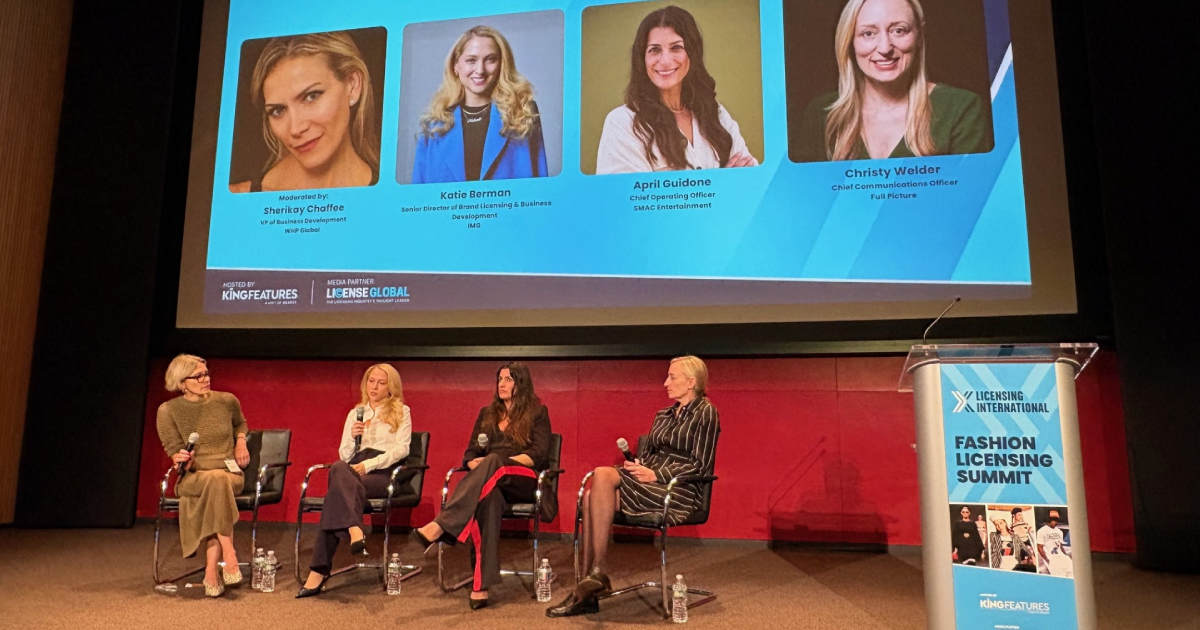
That shift comes as suppliers seek to stand out among the overflow of collabs, licensing executives said at Licensing International’s Fashion Licensing Summit in New York last week. In fact, speakers at the summit argued this changing of the guard has been sped up by younger consumers seeking greater depth in the brands they buy.
While footwear giant Puma, for example, is no stranger to collaborations both large and small, the company’s approach to collabs requires “more refinement” with better “integration with an IP’s ecosystem” to create a deeper story, said David Ballin, Senior Director of Brand Heat and Select at Puma.
“The effectiveness of collaborations has waned a little bit because of the over-saturation, so they have to be built a little differently,” said Ballin, whose company has had collaborations ranging from fashion brands (Noah NY and Fenty) and popstars (Dua Lipa, Rihanna) to entertainment properties (Stranger Things) and athletes (NBA star LaMelo Ball).
“Now it is more about the story, product experience, and message. We need to be fully integrated [with an IP] to create a depth of awareness and desirability. Oversaturation has been a problem since before Covid, but we cannot take that needle out of our arm because it generates too many dollars. The consumer is being stretched thin, and the IP is that extra little sugar that is getting them to buy. And until we get to the point where we can sell regular shoes without IPs like we were before, we are going to be in a heavy IP world for a bit,” Ballin said.
While collaborations are revenue drivers, they also carry the risk of over-exposing their brand if not approached carefully, said Beau Wollens, Partner and SVP for Partnerships at NOAH NY, which has five stores and also has collabs with Puma, LVMH’s Vaurnet, Frog Skateboards, and Timex Group’s Timex. And an imbalance between collaboration partners can sometimes contribute to the types of launches that don’t connect with consumers.
“With [these major companies], they are big enough that they know what they are getting themselves into so that, when they work with a company, they understand the point of views and the approach that is needed to get the best out of the partner,” Wollens said. “They move you on this train that sometimes makes it less interesting, but I do think they have a process that makes you do more than might otherwise be possible. When we look at licensing and brand collaborations—with licensing you cannot change it, but with collabs you can.”
Collaborations are also playing a deeper role in the fragrance category, which has expanded beyond a fashion accessory to become a consumer’s “identity and daily ritual,” said Abby Wallach, Founder and CEO of House of Scentinvent.
“The opportunity [in fragrance] is creating something that is authentic and extends a brand into something that feels genuine, whether that is with a fashion designer or celebrity, in bringing something innovative to market,” said Lori Singer, President of Parlux, which recently launched a new fragrance with the Kenneth Cole brand that named musician Joe Jonas as its ambassador and has licensing deals with popstar Billie Eilish and rapper Drake.
Yet amid this proliferation of collaborations with brands and celebrities alike, a more judicious approach is being taken to gauge the effectiveness of social media to promote those launches, executives said. While the number of followers once was a deciding factor in licensing deals, that has been replaced by the rate at which those followers engage on social media with an influencer, pop star, or athlete, licensing executives said.
“If they’re not getting at least a 10-to-1 ratio [of] followers to engagement, you are not getting an agreement,” Ballin said. Puma recently sold a 29% stake to Anta Sports that could provide greater access to the Chinese market, including through collaborations with its Solomon and other brands. “But if they have a million followers and 1,000 engagements that is good, because we need to be sure that our brand will get the exposure.”