


Co-Branding Connects with Younger Consumers
By Mark Seavy
Co-branding has swept the toy industry, much of it giving a new sheen to nostalgic properties in order to connect with younger consumers.
The strategy is not without precedent in the toy space—board game maker The OP was partly founded in 1994 on making co-branded games with Hasbro’s Monopoly, for example. But the trend was in full swing this week as it stretched across multiple product lines at New York Toy Fair, with toymakers seeking to attract younger consumers to nostalgic properties by pairing them with today’s hit brands.
Basic Fun, for example, re-introduced Hasbro’s licensed Stretch Armstrong last year with standard product. But it returned this year with a broad co-branded line that included Stretch Armstrong with the likes of Toy Story’s Sheriff Woody Pride and One Piece’s Monkey D. Luffy.
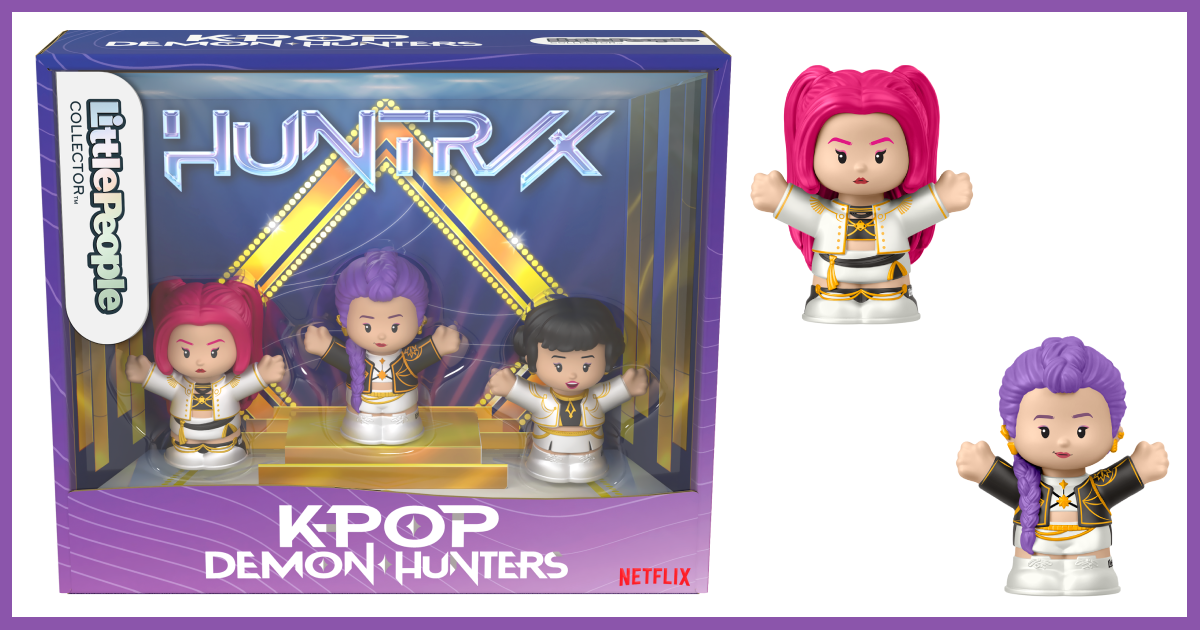
Mattel, meanwhile, launched a line of dolls and action figures based on Netflix’s hit animated film KPop Demon Hunters. The toymaker also spread the IP across the Polly Pockets and Little People ranges, which were first introduced as standalone brands in 1989 (by Bluebird Toys) and 1959 (Fisher Price), respectively. Mattel also introduced a Super Mario version of Little People under an agreement with Nintendo.
Hasbro launched its first broad licensing program for Dungeons & Dragons in 1999 after it acquired the franchise in buying Wizards of the Coast, but the brand traces its roots back to 1974. Now, Basic Fun—among others—is fielding non-articulated figures. And Hasbro has expanded Wizards’ Magic the Gathering card game with co-branding, including most recently with Teenage Mutant Ninja Turtles (a set of which is being released March 6).
“The companies are recognizing that you have to expand your audience,” Basic Fun CEO Jay Foreman said. “And retailers are looking to find ways to bring generations together and many of them want products that everyone can understand. The entire family might not be able to play Fortnite together, but they can with Monopoly (1935) or Lite Brite (1967) and those toys can be expanded and bring back memories. That is something we, along with others, want to tap into.”
Yet the nostalgia that is being tapped into is not limited to co-branding. Nostalgia for the 1990s and early 2000s is growing with some consumers across generations and is prompting IP of a younger vintage to embark on licensing.
Coolabi, for example, released the first Warrior Cats book title in 2003, but it did not break into the digital business until Aldrich-Callen Studios released a game on Roblox in 2023. Coolabi also launched its own direct-to-consumer eCommerce site for Warrior Cats mini figures before signing a licensing deal via agency Retail Monster for collectibles with Bonkers Toys, the first of which were released in January. Coolabi is launching a Warrior Cats YouTube channel in September, said Allison Watkins, Director of Consumer Products and TV Distribution at Coolabi. But that comes after thousands of fan-made Warrior Cats channels have appeared on YouTube, she said.
Another route for bringing young consumers’ attention to established brands is to partner with an influencer.
Preston Blaine Arsement’s PrestonPlayz YouTube channel, which has 17.2 million subscribers, was up for 12 years before he landed a licensing deal for collectibles with Bonkers. Bonkers previously had licensing agreements with Ryan’s World and Ninja Kidz, both on which have been sidelined for now, said Dan Meyer, Head of Brands at Bonkers.
And Pudgy Penguins was born as an NFT collection in 2021 before being acquired by Luca Netz a year later and securing a licensing deal with German toymaker Schleich for collectibles that will be introduced this year. Pudgy Penguins had 8,888 NFTs.
“You have to be everywhere because there is so much content to break through and if you are only known in one place you are restricting yourself,” Watkins said. “We started in one lane and that evolved [to] Roblox and we expanded from there.”