




Collaborations Brace for Change
By Mark Seavy
As more collaborations flood the market, some suppliers and retailers are scaling back on limited-time offers and revamping the strategy behind them.
There is little chance collabs will disappear as a fixture in the brand licensing industry, however. Instead, it is more likely IP owners will increasingly turn toward a deeper story that moves beyond the simple pairing of two brands, licensing executives said.
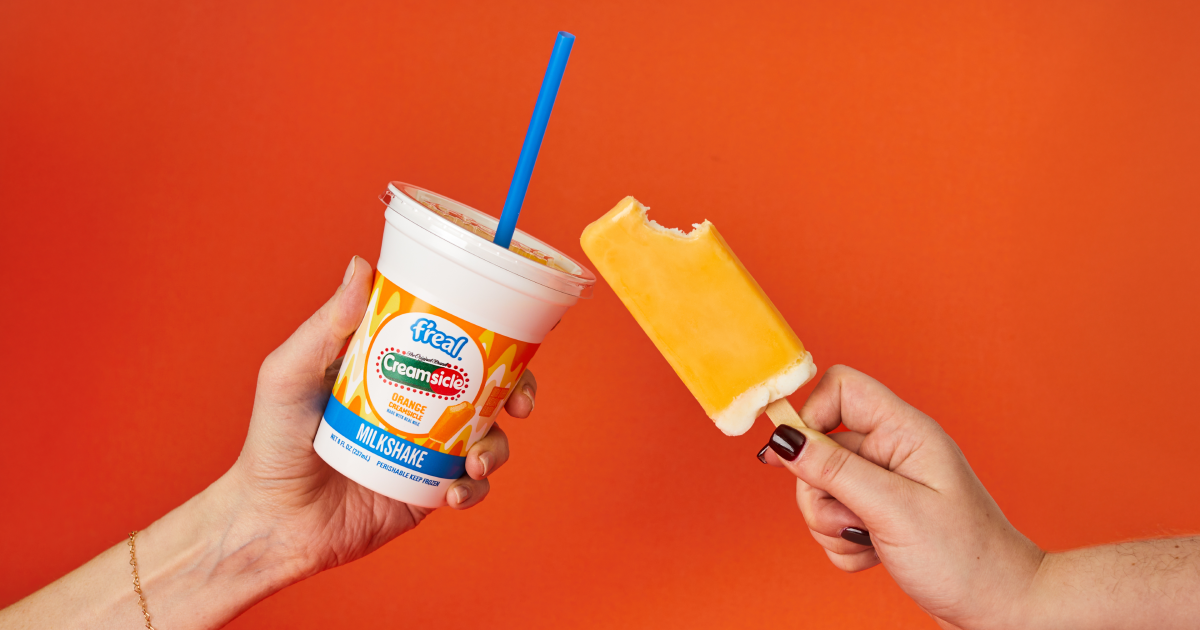
Rich Products, for example, is launching a collab this month across convenience stores mixing its f’real self-serve blenders with Unilever’s Good Humor brand ingredients to create an Orange Creamsicle Milkshake. That partnership follows Rich’s pairing with the Girl Scouts of the USA last August for a Coconut Caramel milkshake. To help its collabs stand out, Rich deployed a “therealfreal” Instagram account and teamed with brand ambassadors on college campuses.
Constellation Brands Inc.’s Modelo and Pacifico beer brands, meanwhile, dug deeper with direct-to-retail apparel collaborations with retailers Zumiez and PacSun that featured in-store video, social media, and other marketing. The Pacifico brand is also launching a fourth collab with Authentic Brands Group’s Quicksilver brand in April featuring licensee Velocity Brands Group’s women’s apparel (swimwear) for the first time.
“Collaborations are not going away, but the days of consumers lining up outside the store for them are far and few between,” Eric Beder, an analyst at Small Cap Consumer Research said. “People are looking for ways to make collaborations special again, so they are not occurring every month. It can become like a treadmill. Customers may like a brand but how many Stanley mugs or coffees done with a singer do you need?”
Collaborations continue to appeal, however, with Starbucks’ pairing with Sanrio’s Hello Kitty quickly selling out last year. And so brand owners and retailers are seeking new strategies to avoid over-saturation.
This is crucial because an overreliance on collaborations and price promotions can “erode brand equity,” said Bath & Body Works CEO Daniel Heaf, who is in the process of overhauling what he said is a chain that has become “slow and inefficient.” But, at the same, the retailer is readying collaborations with both Disney (fragrances, body mist, shower gel) and Vera Bradley (Mother’s Day fragrances).
For its part, Vera Bradley is focusing on “fewer, more impactful and qualitatively executed IP launches going forward”, interim CEO Ian Bickley said in noting previous success with Peanuts, Lilo and Stitch, and Winnie the Pooh collaborations.
“Collaborations are a way to provide a more robust collection of products and more storytelling,” said Debra Joester, President of The Joester Loria Group. “When you do put a collection together you want to make sure there is a thematic element and collaborations are a way to lean into what a brand is doing from a marketing perspective or a cultural moment. But there have been a lot of collaborations where they are there for a millisecond and then people move onto the next one. There is a lot of clutter out there, which makes it difficult to be meaningful.”
Indeed, with hundreds of collaborations, brands can “lose their identity” and their value can be diluted if the strategy is deployed too frequently, said Steven Heller, President of The Brand Liaison.
Moving forward, licensors and their partners will need to find the right balance to take advantage of collaborations without exhausting consumers’ appetite for these partnerships.
“The collaborations for us [in the case of Good Humor] felt like a natural fit with the flavor and that strong nostalgia presence it gives us across generations [of consumers],” said Rachel McCrone, Director of Licensing and Emerging Brands at Rich Products, which has ingredients licensing agreements for f’real with The Hershey Co.’s Reese’s and Mondelez International’s Oreo brands. “There is a lot of competition in the convenience stores, so we are really working on how we follow the data [for licensing] and how we stand out in that noise. The data is important, along with following what your consumers are looking for.”