
Comic Books Write New Chapter for Licensing
By Mark Seavy
After years of deploying a broad licensed IP strategy across comic books, publishers are turning the page to a narrower but deeper strategy.
That could mean less licensed IP in comic books, while at the same time signaling deeper integration for some licensors.
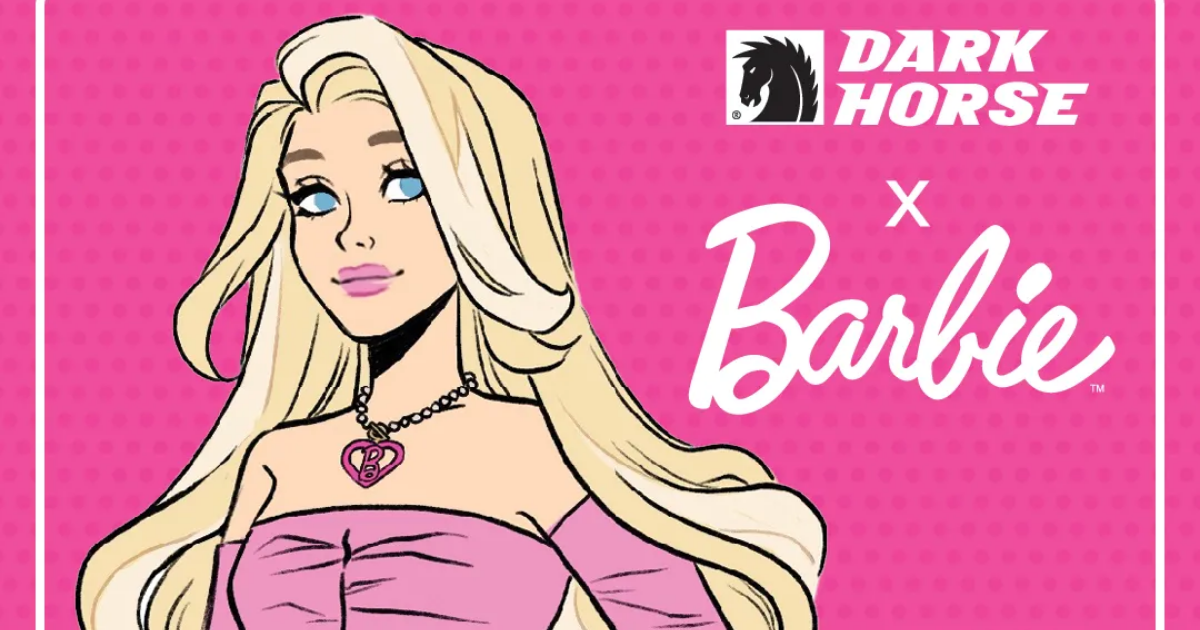
Dark Horse Comics, for example, well known for its horror releases, highlighted at the recent New York Comic Con (NYCC) a forthcoming six-issue Barbie: Together in Time comic book debuting on February 10,2027 that might be a little lighter than the publisher’s typical fare. It features both Barbie and Ken but pays homage to different periods of the former’s history in each issue. It also will mark Barbie’s return to comics, with the first iteration of comic Barbie from Dell Comics, which released five issues across 1962 and 1963. And that was followed by a run with Marvel Comics between 1991-1996 that spanned 63 issues, plus three special editions
“With Mattel and the success of the Barbie movie, it made us think this is not just a children’s property but an all-ages property that we could bring even more mainstream,” said David Marshall, Editor-in-Chief of Dark Horse Comics, which also has licenses for comics based on Mattel’s Masters of the Universe and Hasbro’s Dungeons & Dragons. “Lots of things are changing and five years ago the approach was to publish many series and there was a logic in that there was something for everyone. What we are shifting to is a more curated approach and producing fewer series but taking more deeper steps.”
That approach is also being taken by comic book publisher IDW Publishing, which is readying IDW Goes Dark for 2027 featuring a mix of titles including Sanrio’s Hello Kitty, Skydance’s & Nickelodeon’s Teenage Mutant Ninja Turtles, Sega Sammy Holdings’ Sonic the Hedgehog, Toho Co.’s Godzilla, and Skydance’s Star Trek. The appearance of Hello Kitty in same space as dark comics seems like a departure for an IP, best known for themes of friendship, connection and love. Yet a horror version also is popular on Etsy’s Hello Horror Kitty page.
IDW also released a non-horror Hello Kitty and Friends: Hello World in August. Similarly, Sanrio partnered with Capcom in 2012 for crossover merchandise that paired Hello Kitty with the Street Fighter videogame. And Oni Press is bringing Archie Comics into the horror sphere with Archie in Hell, alongside Sabrina the Teenage Witch. The former is set to be released in November and builds off Archie Comics’Afterlife with Archie, which debuted in 2013 as the publisher’s first comic book not aimed at children.
“We’ve been blown away by the way fans have embraced IDW’s horror books, and this is our opportunity to give them even more of what they love while pushing these characters into worlds and places they’ve never gone before,” said Heather Antos, Senior Group Editor and lead on the IDW’s Dark imprint.
Yet not all comics publishers are convinced that going narrower and deeper is the answer.
Rather, VeeFriends, which is 22 issues in with its self-published comics, unveiled a new Gentle Giant character at NYCC. The publisher prefers creating a range of its own IP before deciding to go narrow or deep, said VeeFriends President Andy Krainak . VeeFriends often creates “micro versions” to test comic idea before making a final decision to publish, he said.
“I think it can be problematic by immediately deciding to go narrow and deep because you can create a scenario where you don’t want to try new things,” Krainak said. “For the last four- or five-years comic books have been pretty much similar across all the formats and more mature. It is a game of energy so we do as much as we can with as many partners as we can to gain attention.”
In doing so, comic books can be adapted for videogames, live action series, movies, and books, industry executives said.
“I think comic books are potentially the most underrated medium that impacts society and 99% of people when they hear the word comic books, they don’t respect it or understand its gravitas in its impact of positivity that the medium has had,” VeeFriends Founder Gary Vaynerchuk said. “With trading cards coming back I have seen how much joy 40- and 50-year-olds have experienced by getting back into the hobby and collecting with their kids. I feel that comic books have not gotten into that same cycle and level of scale yet.”