



Footwear Follows a Cautious Path
By Mark Seavy
Footwear retailers and suppliers are planning cautiously for 2026.
Added tariff costs are hitting footwear in force, though executives we polled at the Fashion Footwear Association of New York (FFANY) show last week reported they have adjusted to new pricing and are predicting a more stable market next year—albeit at higher costs.
Part of the strategy to counteract tariff costs will be a narrower assortment of products. Designer Brands, known primarily for its DSW retail brand, is cutting back in-store inventory by 25% while increasing the depth of styles by 15%, CEO Douglas Howe said.
At the same time, DSW is adding an end cap for Ground Up’s licensed Minecraft footwear (children’s slippers, skate shoes, sneakers) to 100 stores and installing a Birkenstock display (men’s and women’s clogs and sandals) at the front of all 437 locations. And DSW launched a new branding campaign in September that included a “reimagined” store in Framingham, MA. The store has an immersive design, including a customization station for adding embroidery, engraving, and digital printing to footwear, Howe said.
Shoe Carnival, meanwhile, is rebranding its namesake stores as Shoe Station, a label it acquired in 2021 that serves a more upscale ($60,000 to $100,000 annual salary) customer, CEO Mark Worden said. It rebranded 101 locations this year, ending with 428 stores (including 144 Shoe Stations and 284 Shoe Carnivals), he said. It plans to convert another 70 Shoe Carnivals in 2026, according to Worden.
These shifts come as both chains suffered declines in revenue and same store sales.
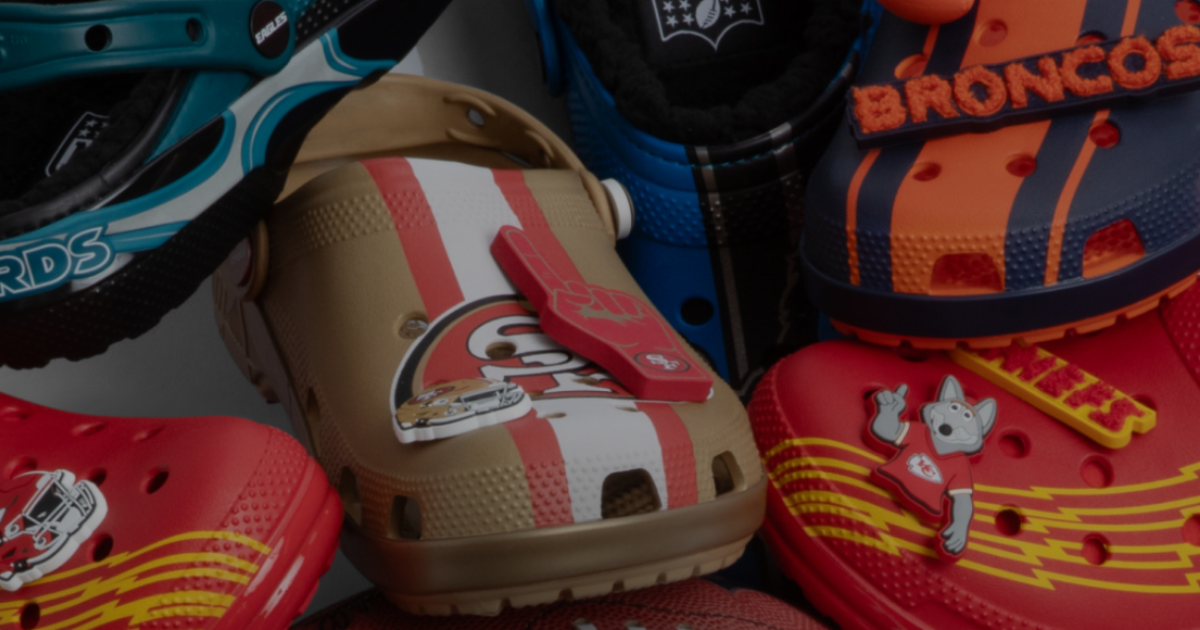
“Retailers are planning cautiously,” said Andrew Rees, CEO at Crocs, which launched NFL-licensed footwear (clogs with Jibbitz charms) this fall starting with 14 teams. “They’re not seeing traffic growth and they’re not expecting significant growth in the short term. They’re not going to plan significant growth into the early part of 2026. They’re fighting cautiously. We do see athletic gaining some share in the good to better portions of the market. So, there’s some open-to-buy going to athletic.”
Despite a degree of caution at retail, suppliers at FFANY were moving ahead with plans for licensed offerings.
SG Companies, for example, further deepened its reliance of lifestyle brands, launching new footwear (slippers, slides) in fall 2026 under the Salt Life brand, which Iconix International acquired from Hilco last fall. Salt Life also has a licensing agreement with Thread Collective for performance apparel that will launch in 2027 and a separate deal that will include opening two new stores in Florida in February. Salt Life’s previous owner, Hilco, earlier had closed 28 locations across 10 states in 2024.
SG is readying licensed ranges (boy’s boat shoes and girl’s Mary Jane shoes and jelly shoes) under Authentic Brands Group’s Sperry for next spring. SG is also reducing its reliance on entertainment brands while still retaining licenses for Minecraft as well as Dr. Seuss Enterprises’ Grinch and Cat in the Hat (slippers, slides) properties.
“We are really focusing on family brands, and we don’t want to be reliant on in-and-out properties like movies that are hot one minute and out the next,” said Kristy Yvars, VP of Licensing and Marketing at SG, whose company ended agreements with Nintendo and Pokémon. “It is too risky.”
The company is also “rebuilding” its Rugged Shark brand, which has been reworked several times since being purchased in 2009. The new approach, guided in part by new President Tim Callahan, will take a more “elevated” approach in style and price for a new line that will debut in the spring, said Yvars. The Rugged Shark brand has an eight-foot section at Walmart and licensing agreements for swimsuits, footwear cleaners (FTI Brands), and apparel (Thread Collective), the latter expected to arrive in 2027. Rugged Shark has $125 million in annual sales, most of it through Walmart.
Ground Up, meanwhile, is readying United States Polo Association-licensed slippers, slides, constructed footwear, and hosiery for launch in 2026, while also developing sneakers, slides, and slippers under the Hershey, Jolly Ranchers, and Kisses brand for 2027. The lifestyle labels are an expansion for Ground Up, which previously focused on entertainment brands. Additionally, the company is readying new “Mommy and Me” products that last year featured packaging Bluey women’s and children’s sneakers together as part of a Mother’s Day promotion. Other licensed candidates are expected to be Sanrio’s Hello Kitty and Disney’s Stitch.
Further deepening the licensing trend at the show was Genesco and RG Berry. Genesco took the wraps off Western-style work and outdoor boots under Kontoor Brands’ Wrangler label, while also moving its Dockers license away from a previous focus on dress shoes. Marubeni Growth Capital’s RG Barry Brands, known for its Dearfoams label, extended its slipper lines with the acquisition of Green Market Services Co., which has deals for LionRock Capital’s Clarks and VF Corp.’s Timberland brands.
As the companies readied their new licensing plans, they were also dealing with tariff costs. Many companies are shifting some production outside China, while conceding that production of slippers, which require hand stitching, will likely stay there due to the expertise of suppliers. Tariff-related wholesale price increases of $5-$10 have in many cases been passed onto retailers, Yvars said. SG has weighed moving some production to Cambodia for molded footwear in addition to China, she said.
“To do something like that [move production], you have to budget for a long time,” Yvars said. “That is easy for a company like Nike or Under Armor that have a lot of control over the market that can help build that infrastructure but, for everybody else, it’s not that simple.”