



Italy’s Parks Bet on Characters
By Roberta Nebbia, Italy Managing Director at Licensing International
In a mature and increasingly competitive location-based entertainment (LBE) market, Italy’s amusement parks and attractions are shifting their focus.
From north to south, the country is home to major resort-style destinations as well as nature, regional parks, and smaller operators. Some are investing heavily in licensed IP, mainly global franchises, to keep a price-sensitive family audience coming back. Others focus on seasonal activations tied to gaming, digital IP, and streaming hits, or on homegrown Italian properties.
They all share the same goal: attracting more visitors while raising the overall value of the guest experience.
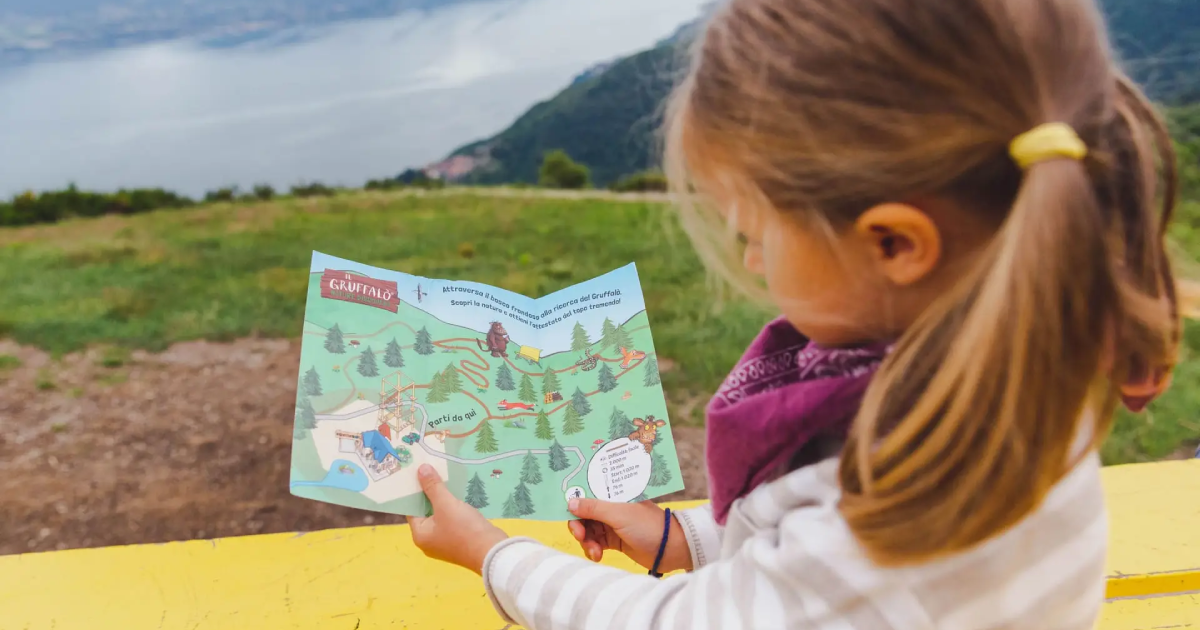
To explore how brands of all sizes can thrive in this changing landscape, we spoke to Massimiliano Freddi. He is the founder and CEO of Wonderwood and a member of the Board of IAAPA, the global association for the attractions industry. His parks on Lake Maggiore and Lake Como recently welcomed the Peanuts characters, who now accompany children and families along the nature trails, alongside the Gruffalo Nature Discovery activity that is based on the worldwide famous book by Julia Donaldson.
Neither brand is a ride or a costumed mascot. Both are classic children’s stories built on curiosity and the outdoors, which suits a woodland setting together with active play, a social nature-based experience, and time away from screens.
Licensing International: How can licensors and LBE operators collaborate more effectively?
Massimiliano Freddi: There have always been two sides to the coin—venues that want more storytelling, and storytellers who would love to be present in physical venues. The challenge is making sure those stories translate well into a physical experience. The other factor that always comes into play, of course, is high fees. I like to think of a licensor as a partner. Once licensors and licensees stop seeing their relationship as supplier and customer, and recognize the true value of partnership, they can work together for the long term to make experiences memorable and bring value to the sector while keeping a sustainable model. I’ve had several experiences where licensors wanted higher fees and, as a result, those costs were cut from the creative and production side. That’s what we want to avoid at all costs. Building long-term relationships is the key to successful collaborations.
LI: In your role at IAAPA, what have you seen in other markets that Italy could learn from?
MF: We’re seeing several experiences in the United States and Asia that we can learn a lot from. On one hand, licensors are becoming vertically integrated and ending up as operators—Netflix House is one example. In Asia, I’m thinking of something like Pop Mart and Labubu, which we also saw arrive in Europe. Even if they may not be as present right now as they were last year, they’ve built a very nice experience in Beijing. Again, I see these IP developers becoming operators. To me, that’s something new. If I can make a comparison, it’s similar to when supermarkets and retailers started developing their own private labels.
When I think about Italy, I see a huge opportunity for IP to find physical locations. Of course, that requires a lot of flexibility. Sometimes the opportunity is a temporary exhibition, sometimes an immersive experience, and sometimes a long-term relationship. Right now, I think we’re still a bit stuck in a model where IP simply means costumed characters making appearances, and that’s it. I believe storytelling matters much more than costumed characters showing up. It’s no coincidence that many of the companies running meet-and-greet experiences have added, and are still adding, workshops and activities that last much longer than a single event.
LI: Where will Italian location-based entertainment be in five years?
MF: I think the industry will continue to grow. We’ll need to see smaller IPs finding their own locations and spaces. Italy is a creative powerhouse, so there are many smaller local brands and IPs that can carve out a space of their own. I really hope to see them do so, and I’m curious to see how. Of course, from a park’s perspective, everybody would love to land premium IP and become a triple-A destination. On the other hand, I think storytelling builds far more value in the long term. That’s why, at a time when the market isn’t producing new IPs as strong as Peppa Pig was, we need to look at how to build long-lasting relationships. Over the next five to ten years, I think we’ll see more experiences in Italy coming from smaller brands, not just the big players.