


Local Brands Gain Focus at Brazil’s International Toy Fair
By Mark Seavy
With about 1,700 new products expected to hit the toy aisle in Brazil this year, there is a growing focus on proprietary brands that offer a faster time to market.
That hardly excludes global brands and IPs, however, as Netflix’s KPop Demon Hunters, Disney’s Toy Story 5, BBC Studios’ Bluey, and Pokémon all took prime placement at the Abrin International Toy Fair in São Paul earlier this month.
But with a greater shift to local product assembly in Brazil (56%) and quicker turnaround times increasingly needed (30-60 days vs. 120-150 days for imports), 64% of new product releases this year are expected to be proprietary brands, according to the Brazilian Toy Manufacturers Association.
“Global brands need a combination of global master toy licensees and local licensees to succeed in Brazil given that we do have a local industry,” said David Diesendruck, owner of the licensing agency Redibra. “Major licensors such as Disney, Netflix, and Mattel increasingly adapt their strategies to this reality. Success in Brazil often depends on combining the global brand power with strong local execution.”
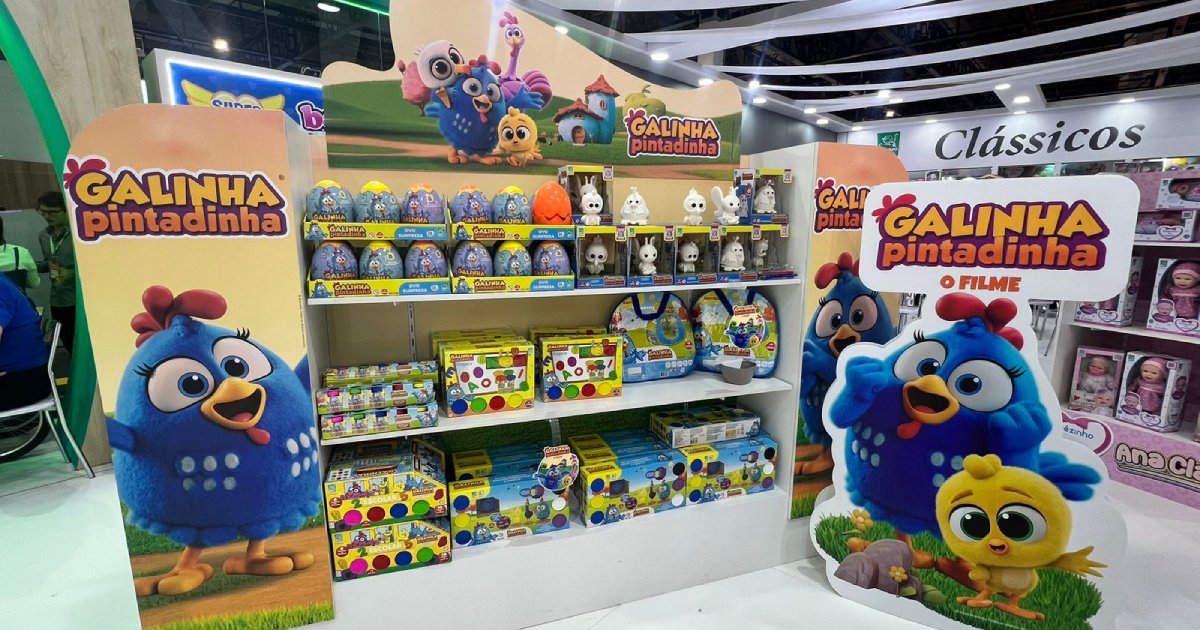
Those proprietary brands and IPs include Galinha Pintadinha, an educational animated series based on children’s songs produced by Juliano Prado and Marcos Luporini that debuted on YouTube in 2006 and was featured in products by 13 licensees at the toy fair. The property has spawned live shows, a musical (the filming of which has been viewed more than 450 million times), DVDs, and a licensing program handled by Redibra that has 30 licensees.
Toymaker Lider Brinquedos, which is a Paw Patrol, Harry Potter, and Lilo & Stitch licensee, used the toy fair to launch finger puppets and vinyl figures based on characters from the TurmaTube YouTube children’s series. The series, which was launched by social media influencers Eliezer and Viih Tube in 2023, has also landed deals with Cacau Show (Easter eggs), Danone (kit with baby formula), and Criamigos (plush toys), and has a live-action film TurmaTube – A Primeira Aventura due later this year.
Further cementing YouTube creators at the tradeshow was Emily Vick, who has 29.3 million subscribers and several licensing programs. Additionally, toymaker Estrela was at the show revamping its brands, including a Monopoly-inspired Banco Imobiliario Express board game and Aquaplay Futebol.
“The trends [in Brazil] are strongly related to content, especially movies and social media platforms like TikTok and YouTube,” said Sandra Haddad, Commercial Director at Grupo Ri Happy, which operates more than 300 toy stores in Brazil. “This will be a year with many children’s movies, so we will probably see increased participation of licensed products in addition to perennial licenses like Harry Potter and Disney.”
At the same time, however, Brazil has seen shifting sales. Toy sales rose 6% during the first half of 2025 but flattened during the second half, giving way to a cautious outlook for the toy business in Brazil this year, licensing executives said.
That has led to a sharpened focus on pricing, where location production can reduce costs by 25-40%, Diesendruck said. Local suppliers also allow for smaller minimum order quantities (500-1,000 units) against much larger amounts required for imported goods. This enables quicker testing of new concepts, he said.
“We are being more cautious this year since retail in general has been facing a more difficult time since mid-2025,” Haddad said. “The economy and purchasing power have changed consumer behavior and consumers are prioritizing entertainment like shows, theaters, restaurants, and travel over consumer products.”