




Meeting the Sustainability Moment
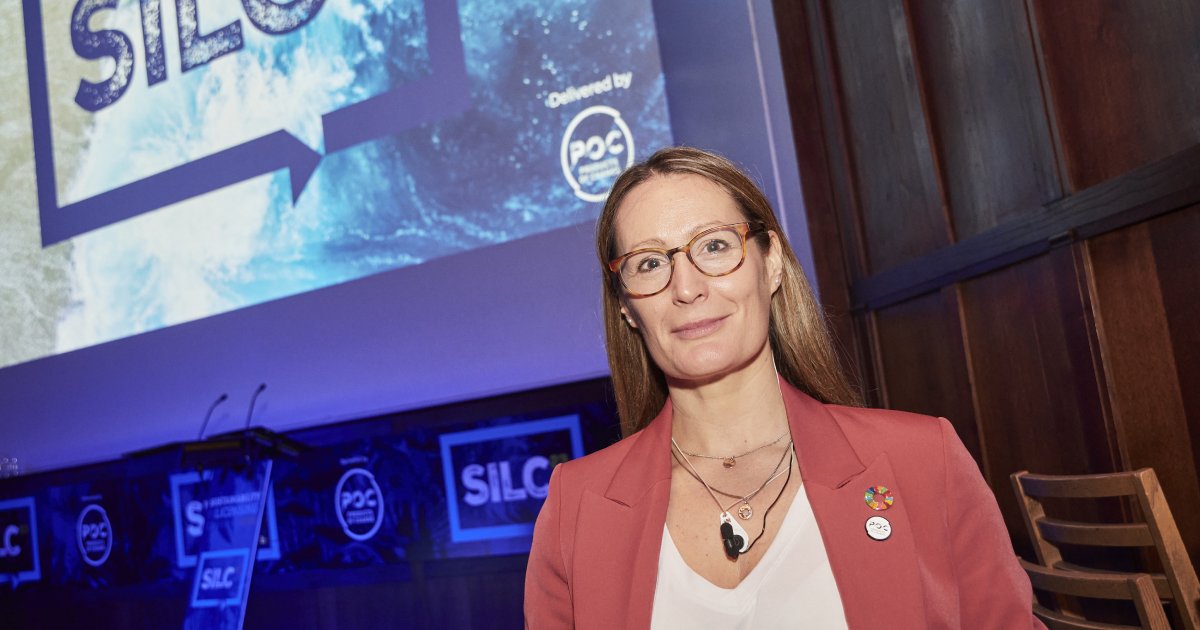
An Executive Voices Blog by Helena Mansell-Stopher, Founder and CEO of Products of Change
The brand and licensing industry has always evolved alongside culture. Trends shift, consumer expectations change, retail landscapes transform, and we adapt. Connecting brands to what matters in the moment is what keeps our industry relevant. But there is one shift that is not a passing trend—the expectation that brands care.
Care about how products are made, about their environmental impact, and about the future is now embedded in how the next generation of consumers views business. This is especially true for consumer expectations around sustainability.
Sustainability is not declining in importance; the language may be evolving, but the expectation is not. In fact, environmental concern ranks second globally in unprompted mentions when consumers discuss sustainability. Research from McKinsey & Company’s State of the Consumer 2025 report shows that 61% of global consumers care about climate change and 51% believe it is businesses, not individuals, that must lead the transition.
Consumers want companies to do the hard work, and they will buy accordingly. What is even more telling is that 53% of consumers assume that if a brand says nothing, it is either doing nothing or hiding something, according to McKinsey & Company’s Sustainability in Packaging 2025: Inside the Minds of Global Consumers report. This means that silence is no longer neutral and cannot be used as an opt out.
Sustainability is Structural
The word “sustainability” is simply about meeting today’s needs without compromising on the needs of tomorrow. And the hard truth is, we are using future resources for present gain at the expense of coming generations.
That reality is what is driving a wave of legislative pressure. Whether it be Extended Producer Responsibility (EPR), packaging regulations, carbon reporting frameworks, or supply chain transparency requirements, governments globally are making producers and brand owners accountable not only for what they put on the market, but for what happens at the end of life of their products.
This is not optional. It is structural.
Retailers including Amazon, Walmart, Target, Primark, and H&M have all made ambitious commitments across greenhouse gas reduction, recycled content, sustainable materials, and packaging impact. Major brand owners within the licensing ecosystem—including BBC Studios, Disney, Hasbro, the LEGO Group, Mattel, Netflix, NBC Universal, Paramount, Universal Music Group, and Warner Bros. Discovery—have set carbon and materials targets aligned with long-term climate ambition.
But while directionally the industry is aligned, the challenge remains in the execution.
The Data and Systems Gap
One of the most significant barriers facing the brand and licensing sector is data visibility, not least because our supply chains are so complex. To understand packaging composition, material sourcing, transport emissions, energy use, and end-of-life impacts, businesses must gather information from across their secondary and tertiary suppliers.
Many organisations are attempting to map this through rudimentary internal systems, but as regulatory requirements expand, those systems are becoming increasingly difficult to manage. There is a clear industry-wide challenge around where sustainability data sits, who is responsible for gathering it, how it connects to reporting frameworks, and how it informs strategic decision-making
Alongside this is a knowledge gap as, for many teams across licensing, design, sourcing, and retail, sustainability is still a relatively new discipline. Data captured within the Products of Change Maturity Index indicates that nearly 30% of businesses cite lack of knowledge or awareness as a barrier to implementation.
Cost is also seen as challenge. Sustainable materials are often viewed as premium, yet material innovation alone can deliver up to 50% impact reduction in many product categories, according to impact assessment programme provider Dayrize through its impact scoring tool. The question is not whether materials matter, but how we can collaborate to scale them effectively to achieve widespread adoption.
The Rise of Circular Consumer Behaviour
While the industry navigates compliance and cost pressures, consumer behaviour continues to evolve.
Data from Mintel’s UK Fashion and Sustainability Market Report 2025 shows that 82% of Gen Z consider sustainability important, particularly in fashion. Yet there remains a gap between intent and action. This is known as the say-do gap, and it is often driven by price and convenience.
However, resale and repair are accelerating rapidly with 64% of 16- to 34-year-olds buying items to resell. Additionally, 32% of Gen Z have purchased second-hand fashion online while 25% have sold unwanted clothing.
And retailers are responding. Primark has introduced repair initiatives, Marks & Spencer has partnered with eBay, Urban Outfitters has expanded renewal platforms, and both Levi’s and Uniqlo operate repair services.
For licensed products, toys, fashion, and homewares, this represents both a challenge and an opportunity as products must be designed differently if they are to be effectively repaired, resold, redistributed, or recycled.
Opportunity Through Collaboration
The industry is under pressure—from legislation, from consumers, and from investors—but within that pressure lies extraordinary opportunity. And we have seen as much already through the emergence of groundbreaking circular business models, repair and resale ecosystems, astounding material innovations, new data transparency platforms, and cross-industry collaboration.
Through working groups, shared frameworks, data tools, and educational programmes, the industry can identify practical next steps and determine where infrastructure must be built collectively. Because this transition simply cannot be achieved in isolation by any one company or sector. Instead, it requires shared language, data standards, material innovation, and, most importantly, shared accountability.
Although we cannot redirect entire systems overnight, we can build the infrastructure together, aligning with legislation, unlocking better materials, improving visibility across supply chains, and supporting businesses at every stage of their journey.
The brand and licensing industry has always been agile. Now, it must also be responsible. Because the next generation is watching. And, together, we have the opportunity to build an industry they are proud to inherit—and one we are proud to lead.
Products of Change is a purpose-driven, global organisation working to accelerate positive impact on climate change across the brand and licensing industry. The organisation works closely with brand owners, manufacturers, retailers, and supporting services to deliver impact.