



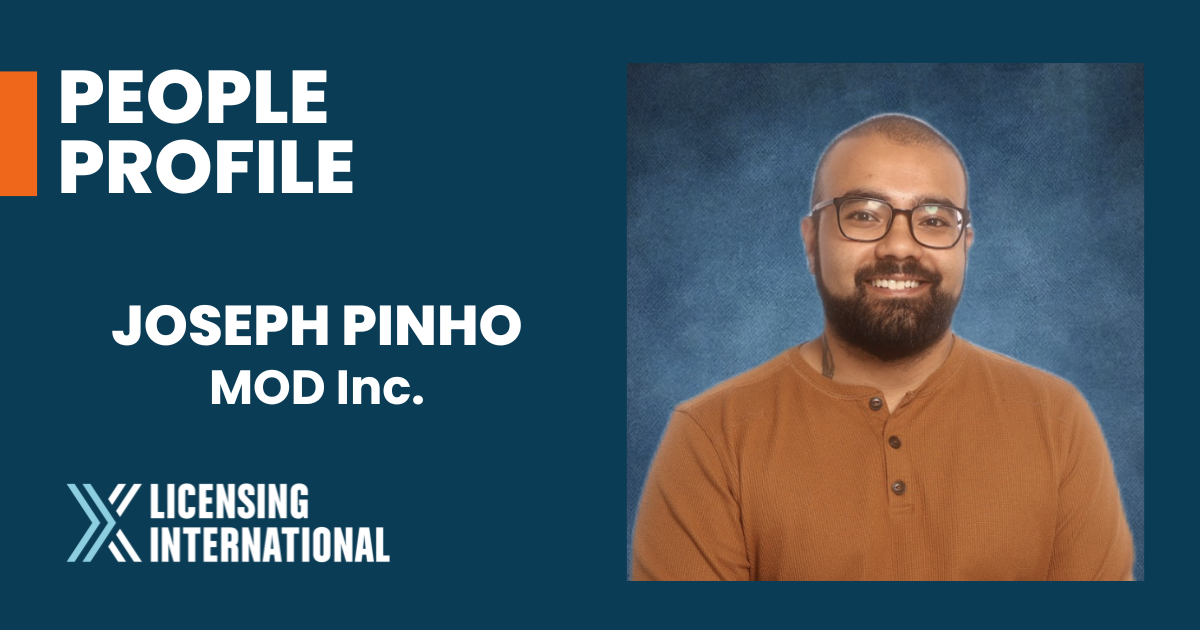
People Profile: Joseph Pinho, Founder of MOD Inc.
The global licensing community is powered by an incredible group of professionals whose diverse backgrounds and creative energy drive innovation and excellence. Each week we profile one of these professionals in this ongoing series.
How did you get into licensing (or how did licensing find you)?
Licensing found me through building my company. When I first started MOD, we focused on merchandise for music artists and bands. As we worked with those clients, we kept running into fan art. Instead of sending takedowns or ignoring it, we helped artists tap into their fandoms and turn fan-created designs into official merchandise. That’s when I realized there was a gap. Fans were already creating and brands were already benefiting from fandom energy, but there was no structured pathway to legitimize and monetize that creativity. That pushed me into learning everything about licensing—how deals are structured, what other companies had done before, and where the system was broken. From there, we expanded beyond music into entertainment brands and broader IPs. Now, we’re building a platform that will help the world license and monetize fan creations.
What’s a “typical” day in your current position?
Every day is different, but there’s a rhythm to it. Mornings usually start with team check-ins to align on campaigns, platform updates, and outreach. Afternoons are a mix of deep work, strategic planning, and meetings with partners or potential brand clients. There’s always some level of outreach happening. Evenings are often when I catch up on follow-ups, proposals, and refining systems. And late at night is when I typically check in with our Discord community, reviewing fan art and engaging with artists directly.
What’s your biggest personal or professional accomplishment?
Building MOD from the ground up while bootstrapping and working part-time has been my biggest accomplishment so far. What I’m most proud of isn’t just a single deal, it’s building a repeatable framework. A system that allows brands to collaborate with their fandom in a structured, scalable, and legally sound way. That possibility of what we can do is what excites me long term.
What are the most significant trends or changes that you’ve seen in the business in recent years?
The biggest shift has been around AI and public sentiment. We now live in a world where AI-generated art and assets are everywhere, and the industry is divided. Some people embrace it. Others strongly oppose it. But what’s becoming clear is that transparency matters—knowing what is and isn’t AI-generated is critical. Companies need to disclose usage, and ethical attribution is becoming non-negotiable. At the same time, licensing deals around AI training data and content usage are going to shape the next decade.
What keeps you up at night? What’s your biggest challenge these days?
The lack of a direct pathway for fans to legitimately work with brands. It still amazes me that you can walk through a Comic Con and see half the floor filled with fan artists selling unlicensed interpretations, while the other half is occupied by the IP owners themselves — often turning a blind eye. There’s a massive opportunity sitting in plain sight. The biggest challenge isn’t proving the concept, it’s connecting with the right decision-makers and getting them comfortable enough to try a new model.
In your opinion, what is the top skill every licensing executive should have in order to succeed?
Communication, paired with patience and persistence. Licensing is long-cycle relationship building. You need to clearly articulate value, especially when introducing something new. You also need the patience to navigate back-and-forth processes and the persistence to stay top of mind. Deals rarely happen on the first call. But, if you communicate well and stay consistent long enough, momentum builds. Licensing rewards those who don’t give up.
What’s the best piece of advice you’ve ever received, or what’s your favorite quote?
The best business advice I received was to focus on the 3 E’s: Efficiently, Effectively, and Execute. I try to prioritize everything through that lens. What can I efficiently and effectively execute on today that moves the needle?
What is your favorite licensing deal of all time?
One licensing deal I’ve come across that I admired was how LEGO Group embraced co-creation through the LEGO Ideas platform, where they sell officially licensed LEGO products designed by fans. That structured collaboration between brand and fan is closer to where I believe the industry is headed and what we’re working towards.
If you weren’t in licensing, what would you be doing now?
I’ve always been entrepreneurial, so I’d probably be building something else in another industry. If I had taken a more traditional career path, it likely would have been something strategy-focused in advertising or the manga and anime world. I’ve always been drawn to narrative systems and worldbuilding. Ironically, in high school I took a career aptitude test and got “Actuary” as my top result, so maybe I’d be calculating risk and insurance somewhere… I heard the pay is good.
The last licensed product I bought was…
A real-sized glass Dragon Ball from Dragon Ball Z. I bought my first one at Fan Expo in 2014. Ever since then, whenever I’m at a convention or in a nerdy collectible shop, I keep an eye out for another one. I don’t actively hunt them down online, it’s more fun to leave it to fate. It’s a lifelong side quest of mine to naturally collect all seven Dragon Balls.