


People Profile: Simran Bhatia, Brand Licensing Technologist at Isaac Morris Ltd.
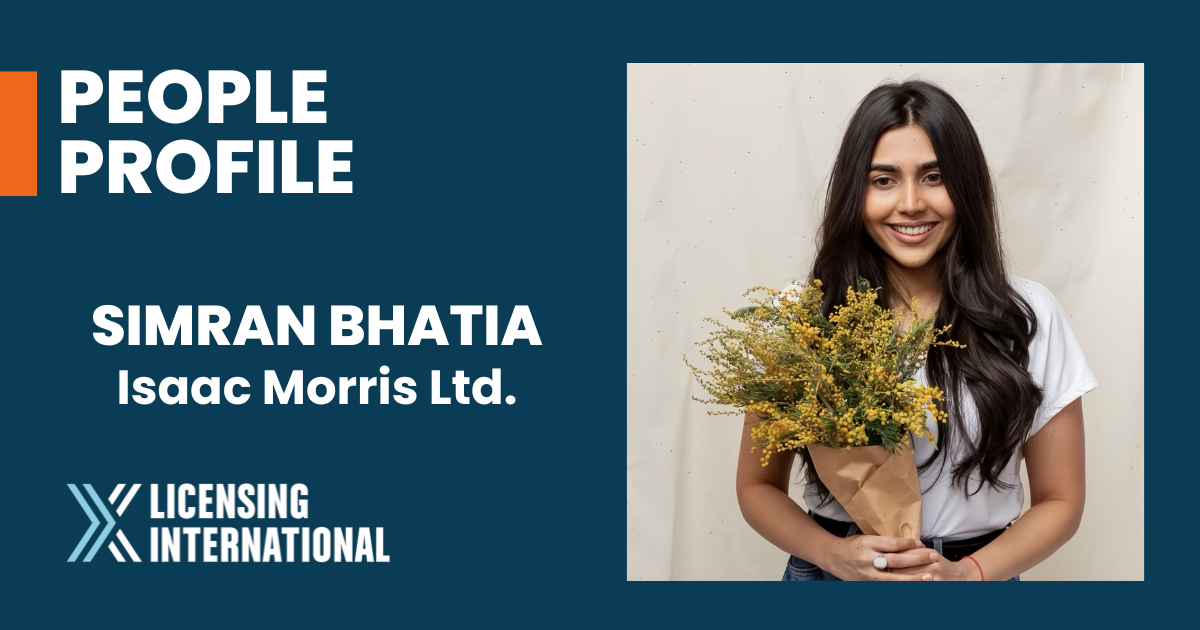
The global licensing community is powered by an incredible group of professionals whose diverse backgrounds and creative energy drive innovation and excellence. Each week we profile one of these professionals in this ongoing series.
How did you get into licensing (or how did licensing find you)?
I was first introduced to licensing by my graduate professor, Bill Gaden. His course showed me that licensing isn’t a support function—it’s a strategic engine for brand growth where IP, product creation, and partnerships are orchestrated. I was struck by how a single agreement can reshape a brand’s product roadmap, narrative, and revenue model. From then on, I intentionally built my career in licensing because it’s where creativity, commercial strategy, and long-term brand value come together.
What’s a “typical” day in your current position?
A typical day sits at the intersection of strategy and execution. It usually starts with reviewing key updates and priorities, then moves into cross-functional conversations to align on next steps. Throughout the day, there’s a steady focus on moving programs forward, balancing partner needs, timelines, and approvals so everything stays on track and commercially aligned.
What’s your biggest personal or professional accomplishment?
Personally, I’m most proud of being nominated for the Novi International Leadership Awards while building an international career and completing advanced studies in both AI and business. Professionally, my biggest accomplishment has been elevating how licensing decisions are made, bringing more structure, clarity, and data-driven thinking into the day-to-day, so teams can move faster, stay aligned, and drive stronger outcomes.
What are the most significant trends or changes that you’ve seen in the business in recent years?
Licensing has evolved from simply placing a logo on a product to building long-term brand ecosystems where storytelling, experiences, and community matter as much as the item itself. Consumers have changed too—they’re more selective, value-driven, and quick to spot what feels authentic versus what feels forced, and they expect brands to show up consistently across culture, content, and product. Retail has also fragmented, so programs need to perform across DTC, marketplaces, specialty, and social commerce, not just a few big channels. Finally, data and AI are becoming central to decision-making, and rights management is getting more complex as AI-generated content becomes more common.
What keeps you up at night? What’s your biggest challenge these days?
What keeps me up is the speed of change—priorities and market signals can shift quickly. The biggest challenge is turning that movement into forward momentum, keeping teams aligned, making timely calls, and staying focused on what matters most so decisions hold up as things evolve.
In your opinion, what is the top skill every licensing executive should have in order to succeed?
Licensing moves fast and the strongest executives can spot what will scale, what will dilute value, and where hidden risk is building before it becomes a problem. It’s not just about saying “yes” or “no,” it’s understanding why and structuring terms that protect long-term upside.
What’s the best piece of advice you’ve ever received, or what’s your favorite quote?
The best advice came from my graduate professor: treat licensing and partnerships as a growth strategy, not a logo exercise. When they’re done right, the right partner and execution can reshape a brand’s direction and momentum. A quote that captures that mindset is “to rise from its ashes, a phoenix must first burn.” It’s a reminder that reinvention is part of growth, brands evolve, audiences shift, and what worked before can lose relevance. Licensing and partnerships can accelerate that reset by aligning with the right collaborators and products to unlock new categories, new consumers, and a fresh reason to care.
What is your favorite licensing deal of all time? (It doesn’t have to be one that was signed by you.)
One of my favorites is the Barbie’s Dreamhouse extensions, especially the partnerships that took the Dreamhouse beyond toys and into real home and lifestyle spaces. It’s licensing at its best because it doesn’t feel like a product add-on. Instead, it feels like a natural expansion of Barbie’s world. It stays true to the core story, taps into nostalgia while still feeling modern, and gives fans a way to experience the brand and not just buy it.
If you weren’t in licensing, what would you be doing now?
If not in licensing, it would be as an artist painting and building a world through my own stories. Ideally, creating collections that tell a narrative and sharing them through exhibitions, prints, and creative collaborations.
The last licensed product I bought was…
The last licensed product I bought was a Band-Aid. It sounds funny, but it’s the perfect reminder that licensing is everywhere. Even something as annoying as a small cut feels a little less serious when there’s a familiar character on it, like a tiny dose of comfort and “magic” that makes the moment better.