




Shoe Brands Find Their Footing with Younger Consumers
By Mark Seavy
The lines between fashion, culture, and sports continue to blur as footwear brands seek to expand their reach.
Collaborations are not new for the footwear business, but these partnerships are expanding as brands look to connect with younger consumers.
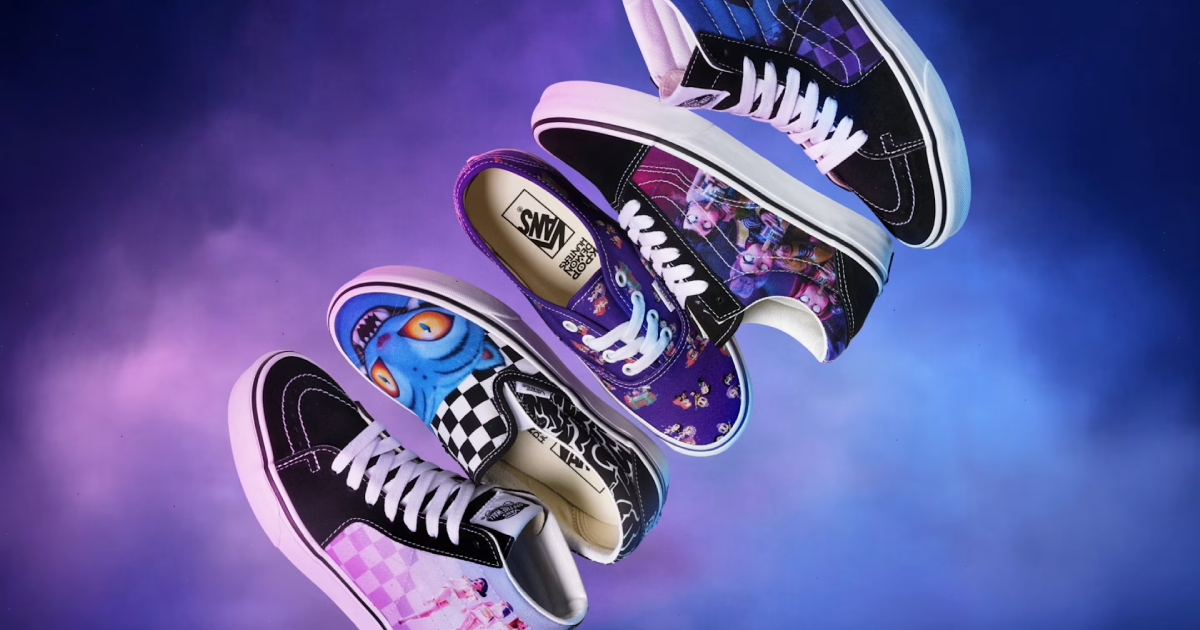
VF Corp.’s Vans brand, which has recently closed 140 stores and posted a 10% decline in sales in Q3, received a boost with KPop Demon Hunters. The co-brand quickly sold out online in December, resulting in a second production run, VF CEO Bracken Darrell told investors. The KPop Demon Hunters collaboration went from design to final production in just 10 weeks as VF drafted off the popularity of the hit Netflix film, Darrell said. Vans also worked with Blink 182 drummer Travis Barker for a line last fall and introduced a loafer version of its skateboard shoe.
Nike has launched a series of collaborations in recent weeks with Levi’s, Realtree, and streetwear brand Supreme. These collaborations focused on putting a new spin on time-tested products.
In the case of Levi’s, Nike first worked with the jeans supplier six years ago, but more recently launched Air Jordan 3 shoes (first introduced in 1988) featuring a Levi’s tag and denim base layer. Former NBA star Charles Barkley’s Air Max2 CB 94 has been refashioned as a three-style collaboration with social media favorite Supreme, whose box logo is found under the shoe’s rubber tongue. And for Realtree, its camouflage designs are found not only across sneakers but also slides, hoodies, and fleece pants.
“The collaborations give them [the footwear companies] exposure and credibility in spaces where they don’t typically play,” said Beth Goldstein, industry advisor for footwear and accessories at research firm Circana. “There is also an emotional aspect—rooted in fandom, nostalgia, or community—giving consumers something to connect to on a personal level. In addition, limitededition drops and collaborations are often about scarcity, driving excitement and urgency. And, by reimagining existing silhouettes through collaborations, brands can deliver newness without reinventing the wheel.”
Crocs, a brand well known for licensed collaborations, recently launched the “Wonderfully Ordinary” marketing campaign that positions Crocs as a lifestyle brand and promotes self-expression in a bid to attract the valuable Gen Z cohort. The advertisement went live in the U.S. this month and will expand with product storytelling, digital and social experiences, and retail activations. The new campaign follows the hiring last August of former Fabletics executive Carly Gomez as Chief Marketing Officer with responsibility for the Crocs and Hey Dudes brands.
In addition to the marketing effort, Crocs also launched a collaboration with actress Millie Bobbie Brown as well as co-brands with Roblox, the National Football League, Krispy Krème, and Pop Mart’s Skullpanda. It also featured actress Lola Tung (The Summer I Turned Pretty) as the spokesperson for its revamped Classic Clog line that was live streamed on TikTok Shop.
“Collabs usually aren’t about sales, they are about marketing,” Goldstein said. “Social media has changed the dynamic, enabling buzz well beyond the small number of consumers that could snag one.”
With social media taking over as the leading marketing tool, store traffic for the Vans brand is lagging, Darrell said. VF Corp. needs more collaborations like its offering with KPop Demon Hunters to drive the store business, he said. And, at Nike, a further overhaul also is needed.
“We need to right size our classics business, diversify our product portfolio, deepen our consumer connections, strengthen our partner relationships, and realign our teams and leadership,” Nike CEO Elliott Hill told investors. “I’d say we’re in the middle innings of our comeback.”