



The Technology Taking the Stage at CES
By Mark Seavy
The CES show’s evolution from a sharp focus on consumer electronics (CE) to an event featuring technology of every stripe was sealed earlier this month in Las Vegas.
Even the name of the show (once called the Consumer Electronics Show) has morphed into an acronym as artificial intelligence (AI), autonomous and electric vehicles, robotics, and food and beauty technology shared equal billing with audio and video.
While longtime CE brands like Sony, Panasonic, LG Electronics, and Samsung had a major presence at the show, others (including RCA, Thomson, Philips, and Toshiba) have shifted to a licensed presence.
Established Inc. completed its acquisition of Technicolor, which brought with it RCA, Thomson, Ferguson, and Proscan—brands that were once part of the standalone company Thomson Consumer Electronics. Voxx Corp. (formerly Audiovox) was acquired by Gentex Corp. last year. And Chinese TV manufacturer Skyworth, which labored for many years to sell CE under its own label, has since licensed the Philips brand.
Amid these changes, brands better known in the grocery aisle have gained a consumer electronics sheen.
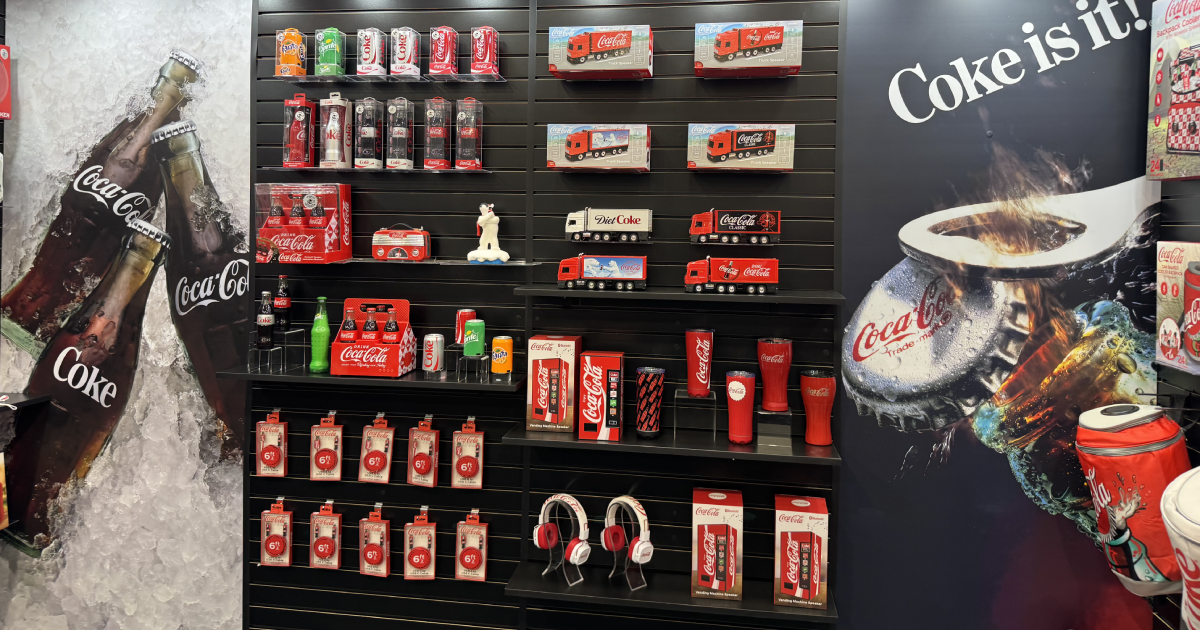
Premier Accessory Group, for example, fielded licensed waterproof Bluetooth wireless speakers under Unilever’s Popsicle brand that will ship in March to CVS and Kroger. M&S Accessory Network, meanwhile, is fielding Coca-Cola co-brand speakers in bottle and can shapes. And Jem Brands has licensed the hardware brand Black & Decker for LED-based utility lights and former CE accessory label Monster for LED lighting.
Even the more basic products like memory sticks and solid-state drives (SSDs) have become fodder for licensing. Memory supplier SanDisk is shipping FIFA-branded 64- and 128-gigbyte flash drives in the shape of a whistle and tied to a lanyard along with SSDs, building out a line that also includes licensing deals for the National Park Service and Crayola.
“Everyone wants something new in form and function because that is what gains attention and the more distinctive the better,” said Stuart Seltzer, President of Seltzer Licensing Group, which represents Unilever brands for licensing.
Also attracting attention at CES were robots, which have long held the promise of the future at the annual event but have been slow to gain the mass appeal that warrants licensed brands. That might be starting to change with entrants like Switchbot’s Onero H1 humanoid robot that features jointed arms, fingers, and camera vision that enables it to handle manual tasks like folding laundry. Onero’s demonstrations at CES showed the jerky and slow robot still needs work, but the promise was there.
The same held true for Samsung’s Ballie, which has been under development for six years and whose proposed launch last year was delayed. A redesigned version at CES was packed with Google Cloud’s Generative AI designed to carry out voice commands and use a built-in projector to display video. Boston Dynamics, meanwhile, unveiled its production ready Atlas robot and Hyundai announced plans to produce 30,000 units annually by 2028.
“The robot technology is getting more sophisticated and eventually it will lend itself to licensing,” a licensing executive said. “But right now many of the robots are not commercialized yet for consumers. Once they figure out how to get them to the mass market, then licensing will come into play because companies will be looking for ways to boost sales.”
The success of consumer-grade robotics and other advanced technology will hinge on AI’s continued expansion. That much was clear when Jensen Huang, CEO of chip developer Nvidia, unveiled the company’s newest AI chip, which promises to do more computing with less power than previous generations. Nvidia’s Vera Rubin computing platform will be central to Mercedes-Benz’s plans for autonomous vehicles, which will be built around Nvida’s self-driving technology.
“This is how we’re going to get everybody to the next frontier and push AI to the next level, and, of course, build those data centers energy efficiently and cost efficiently as well,”