




The Firearms Industry Focuses on Lifestyle
By Mark Seavy
In the face of declining sales, the firearms industry is focusing on lifestyle to attract younger consumers.
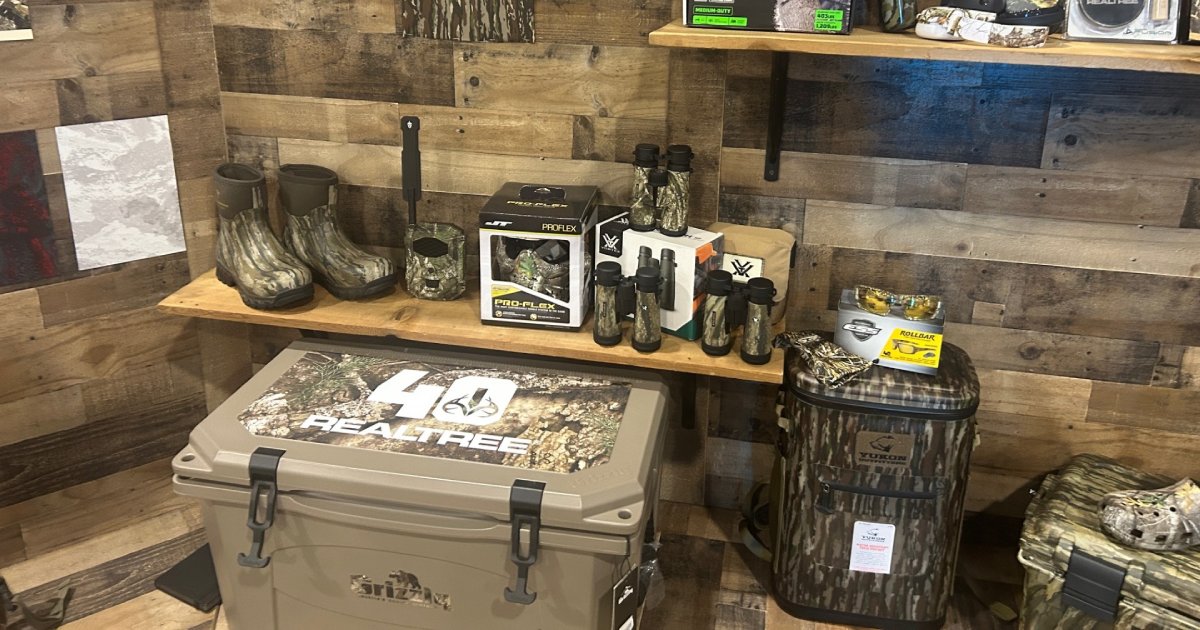
Licensed apparel, bourbon, footwear, and coolers competed for attention with standard issue firearms at the National Shooting Sports Federation’s recent Shooting, Hunting and Outdoor Tradeshow (SHOT) in Las Vegas, for example.
And while firearms were still front and center at the tradeshow last week in Las Vegas, it was clear that manufacturers and retailers are creating a lifestyle “experience” in stores.
A SHOT University presentation highlighted the Coach brand’s addition of cafés to their stores and membership-based clubs where shooting ranges are combined with bars and restaurants. Offerings like The Range at Austin, Lock and Load Miami, The Range 702 in Las Vegas, and the Scottsdale Gun Club are a cross between a posh country club and a retail experience. For smaller firearms retailers, it’s about reducing store inventory to make room for a lounge or a coffee bar, industry executives said.
“The industry has focused on efficiencies in creating more product faster at a lower cost and that made sense years ago,” said Michael Goerlich, President of Threshold Strategic Consulting. “Now, the industry is faced with a decline in business with fewer people and it requires thinking less about how to serve the mass market and about more intelligently moving into more niche, lucrative markets. The industry no longer has ever more customers coming in.”
Indeed, U.S. consumers bought 15.3 million guns in 2024, down from a record of 21.8 million in 2020, according to The Trace gun sales tracker, which estimates sales based on national background check data.
The number of guns being produced also declined to 14.9 million units in 2024 (down 36% compared to 2020). The pandemic prompted a surge in long gun and handgun sales, but 2024 witnessed a decline in sales to a level similar to 2013.
To appeal to younger consumers, New Jersey-based Speed Shop Tactical has had “Guns and Grind” coffee events and has a Reddit channel as well as an Instagram account for promotional purposes, said store owner Thomas McCoy. Other dealers have offered date night and potluck dinner promotions.
The key is for shops to focus on specific models and to offer training opportunities as part of retail, industry executives said. Lock and Load in Miami, for example, specializes in machine guns.
“In-person experiences are the future for Millennials and Gen Z,” Goerlich said. “You need content to shape their interest. Too many stores are bargain bins with too much inventory and that must be taken out for extra room. Every dollar spent on inventory is a dollar not spent on demand creation for events or other promotions that build connections with your customers.”
Realtree, whose camouflage designs are spread across more then 800 licensees, featured a Harley Davidson Pan American 1250 motorcycle and Yamaha’s Wolverine RMAX off-road vehicle with its designs. Neither was for sale and both were prototypes, said John Clay O’Neal, Business Development Manager at Realtree. The earliest a camouflage-equipped Wolverine could be available would be 2027, according to O’Neal. The motorcycle was strictly a display piece, although Realtree does provide licensed designs for the motorcycle company’s apparel.
Ammunition manufacturer Olin Corp. licenses the Winchester brand to FN Herstal’s Browning North America for rifles but it also has an agreement with Michigan-based Ugly Dog Distillery for Winchester-branded Kentucky bourbon, said David Salmon, CEO at Ugly Dog. Ugly Dog started online sales of the Winchester bourbon on January 20 and had an initial 12% conversion rate for purchases against a more typical 2-3%, Salmon said. The Winchester bourbon is available in 92- and 102-proof versions.
There is a strong correlation between whiskey drinkers and the more than 14 million hunters in the U.S.hunters, something that hasn’t gone unnoticed by the firearms and alcohol industries. Kentucky-based Log Still Distillery introduced an 86-proof Remington Reserve bourbon late last year under a licensing agreement with ammunition supplier The Kinetic Group, which purchased the brand in 2020.
“It’s a lifestyle and there are a lot of opportunities for licensing,” said Troy Frouche, Brand Licensing Manager at Olin Corp (Winchester). “We specialize in making ammunition but there is apparel, hats, and gun accessories. We don’t make those and there you have the importance of licensing.”
Licensing is becoming increasingly important as the industry focuses on brand-building to connect with consumers on a deeper level.
Colt’s Manufacturing, which was purchased by Colt CZ Group SE in 2021, has built out a range of branded revolvers, for example. It started in 2018 with the relaunch of a revolver line that had been dormant since the Blue Python model was discontinued in 1997.
Sturm, Ruger & Co., which acquired Marlin Firearms in 2020, is reintroducing one of Marlin’s sub-brands, Greenfield, for bolt-action rifles to target entry level-models, a Sturm Ruger spokesperson said.
And 5.11 Tactical, which specialize in firearms-related apparel, launched its first collaboration with its Beyond division since buying the company in 2012. It also added new colors to its Founder’s Jacket sport coat line that features MOLLE heavy duty nylon straps, a drop pocket, and zippered internal chest pockets designed for security, secret service, and other professions.
“We see marketing spending shifting all over the place because there are more places to spend it,” said Dan Kahn, CEO of the marketing firm Tread Agency. “Retailers and manufacturers have control of their brand and what does that do? It makes customers feel like they connect and align with you. The idea is to pick a lane and stick with it. The companies must give customers more reasons to like them because then they will continue to buy.”