



Theme Parks Expanding in the Middle East
By Mark Seavy
After years of gradually building a presence in the Middle East, theme parks are accelerating their pace of development—much of it via licensing.
That strategy is being fueled by several Middle Eastern countries seeking to broaden their business beyond a reliance on natural resources like oil production as well as entertainment companies moving to expand into new regions outside the U.S. and China. Through licensing, brand owners can reach these territories with less risk.
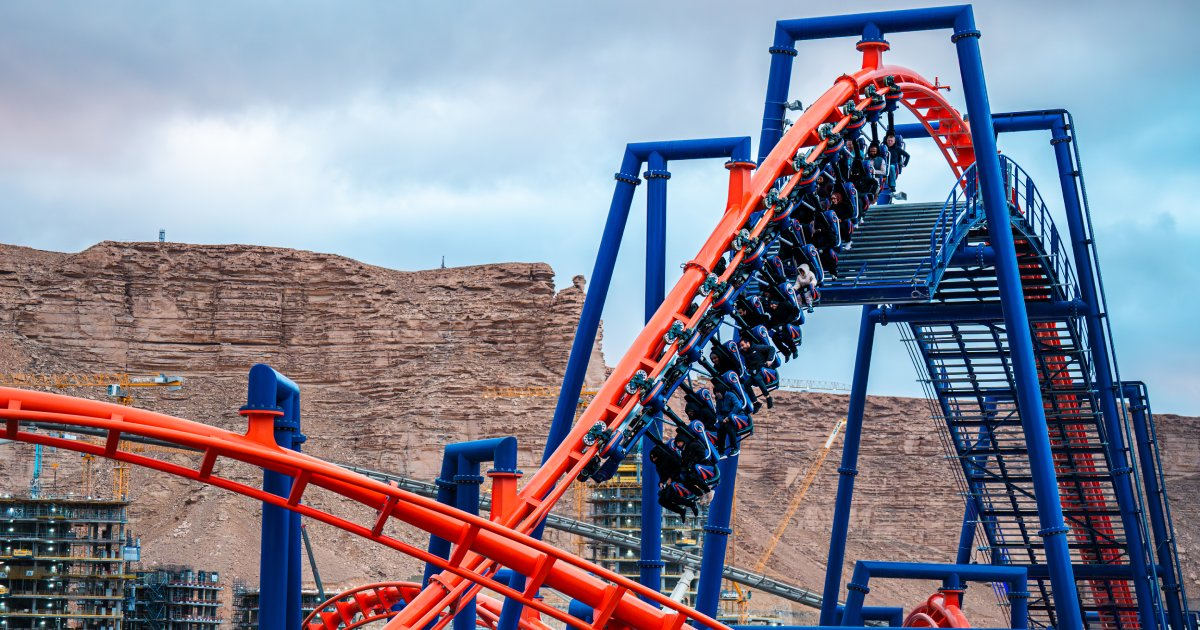
The growing trend was underscored by the December opening of Six Flags Entertainment’s new Qiddiya City park in Saudia Arabia with Qiddiya Investment Co. It marked Six Flags’ first park outside the U.S. Six Flags previously ended plans with DBX Entertainment for a park in Dubai, United Arab Emirates in 2019 and with Riverside Investment Group for a facility in Jiaxing, Zhejiang, China in 2020.
This new Six Flags opening followed Universal Studio’s plans with licensee Qiddiya Investment Co. to open a theme park in Saudi Arabia in the 2030s. That marks a return to the Middle East for Universal after plans with joint venture partner Dubai Holdings’ Tatweer for a park in Dubai fell through in 2016.
Additionally, Disney announced a licensing deal with Miral to open Disneyland Abu Dhabi as soon as 2030 on Yas Island, which is already home to Warner Bros. and Ferrari parks. It takes about 18 months for Disney to design a park and three to five years to build it, CEO Bob Iger has said.
“These regions are working toward diversifying their economies so they are not so dependent on natural resources, something they have been doing for many years,” said George Wade, President of the consulting firm Bay Laurel Advisors. “Many companies also are highly leveraged so, in many ways, it makes sense to lay off some of the risk on licensees. And there is not as huge a consumer base to dig into as China, so in many ways Middle Eastern countries need Disney and Universal more than the studios need them.”
Despite the potentially smaller consumer bases, it’s clear that companies are placing a focus on the Middle East for expansion.
Comcast CEO Brian Roberts, whose company owns Universal via NBCUniversal, was in the Middle East for an investor conference when the agreement for Qiddiya was announced. Iger has also emphasized the region’s accessibility to 500 million income-qualified consumers and a forecast of 39 million tourists to Abu Dhabi by 2030. The agreement with Miral comes as Disney is “investing broadly to drive the parks business,” which is key to Disney’s maintaining double-digit percentage increases in earnings, according to CFO Hugh Johnston.
“Abu Dhabi represents a massive opportunity for us, and we have a partner that is really putting up the capital on it,” Iger told investors. “So, we like the approach from a deal structure standpoint. Abu Dhabi is the one place in the world where we do not have a major presence, and the geographic region taps into India, Eastern Europe, and Africa.”
Disney’s investment also follows a year in which its global park attendance declined 1%. This including a 2% decrease at Walt Disney World in Florida, which faces new competition from Universal’s Epic Universe. Moving forward, Disney is launching several new branded experiences in its parks. Disney’s Animal Kingdom in Bay Lake, FL is opening Indiana Jones and Encanto attractions while two Cars rides will debut at Walt Disney World in Orlando, FL. Those are in addition to a new Spider-Man attraction at the company’s Shanghai park and a Lion King experience in Paris, France.
For its part, Universal’s content and experiences division, which includes parks, posted a 19% increase in Q3 revenue, benefitting from the first full quarter of financial results from Epic Universe.
Like Disney, which expects to spend $30 billion on its parks and cruise ships over the next decade, Universal will also invest heavily—including in a new park in Bedfordshire, UK that is slated to open by 2031, Comcast Co-CEO Michael Cavanagh said. Universal received the approval of the UK’s Ministry of Housing, Communities, and Local Government for the park in December and construction is expected to begin this year.
Universal is also spending on smaller formats. That includes spreading Halloween Horror to other parks outside Area 15 in Las Vegas, NV and opening a 32-acre Universal Kids Resort in Frisco, TX later this year that will feature SpongeBob SquarePants’ Bikini Bottom and DreamWorks’ Shrek’s Swamp experiences, Cavanagh said.
In opening new parks and experiences, companies like Universal, Disney, and Six Flags have vacillated between joint ventures, full ownership, and licensing. In licensing agreements for parks, the companies give up some control but still have final approval for how IP is deployed. In these licensing deals, there has historically been a combination of royalties and revenue sharing.
“In licensing, the companies are entering into a relationship where you can use your veto power to some degree, but that only goes so far because you have to keep negotiating to move the ball forward,” Wade said. “There is so much involved in these agreements so that inevitably there are going to be some disagreements because it is not straight t-shirt deal and goals between licensors and licensees will never be 100 percent aligned.”