


Candy and Snack Licensing Evolves to Compete with Healthier Options
By Mark Seavy
Candy and snack foods are focusing on co-branding and ingredients licensing as properties across the food and beverage category compete with a growing onslaught of healthier diets, weight loss drugs, and higher ingredients costs.
This strategy was evident at the National Confectioners Association’s recent Sweets & Snacks Expo in Las Vegas, as suppliers responded to those headwinds with a broadening of co-branding efforts.
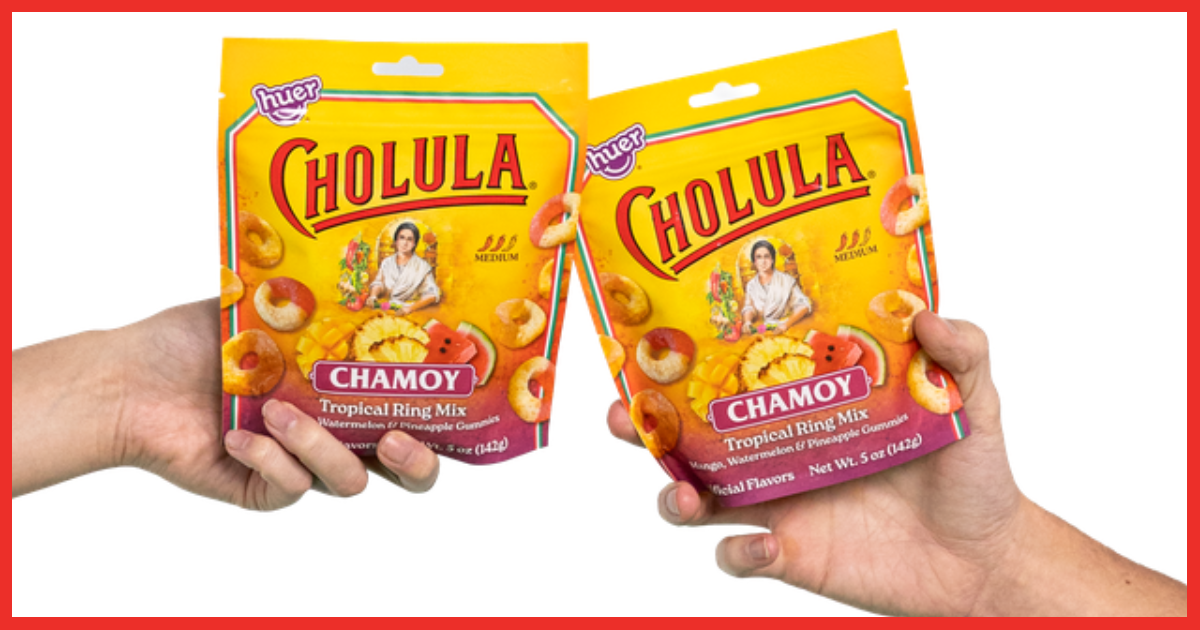
McCormick & Co.’s Frank’s RedHot and Cholula hot sauce brands, for example, moved into spicy gummy bears with licensee Huer Foods, which also recently launched limited-edition Masters of the Universe gummies with Hasbro.
Fire Brands, meanwhile, launched Hubba Bubba non-carbonated flavor-enhanced water, returning Mars Inc.’s bubblegum brand to a category it last occupied with soda through licensee A.J. Canfield Co. in the 1980s. Additionally, Garnett Station Partners paired with Candyrific for Kona Ice gummies, while GoTo Foods’ Cinnabon brand licensed Wicked Cutz for meat snacks, including jerky flavored with the bakery chain’s proprietary Makara cinnamon blend.
“Like virtually every other form of licensing, these co-brandings are about trying to widen the audience for the products while also coming as young consumers seek ever-more unique pairings,” a licensing executive said. “The strategy of co-branding may not be new, but it is certainly expanding its reach.”
Yet this new wave of co-branded candy and snack offerings may be tempered by the growing push for healthier ingredients, including items with additional protein and fiber.
Trilliant Food & Nutrition, which fields protein drinks under its Nurri brand, launched iced lattes with the 1,181-store Dutch Bros. coffee chain. The drinks are listed as “GLP friendly,” meaning products support the diets of people using weight loss drugs and emphasize high protein and fiber as well as smaller portions sizes. According to Grandview Research, sales of GLP-1 drugs hit $66 billion last year and are forecast to increase 12% annually to reach $185.3 billion by 2033.
Other companies, including Sweet Freedom (Fizz sparkling water) and Two Spoons (ice cream), have also emerged to ride the GLP-1 weight loss wave driven by brands like Ozempic, Wegovy, Mounjaro, and Zepbound. Two Spoons ice cream features 30 grams of protein and no sugar, for example.
While candy and snack suppliers have yet to see a significant impact in sales due to the growing use of these weight loss drugs (Hershey has said the effect of GLP-1s on sales has so far been minimal), many companies are bracing for it.
“We will adapt to changing consumer tastes and always have, but GLP-1 may require some reformulations and a different type of marketing than has been deployed in the past,” a candy brand executive said.
Perhaps an indication of how these marketing strategies are changing can be found in Mars Inc’s M&M’s recent partnering with the Peacock streaming service’s Love Island USA for the romance-themed reality show’s eighth season. The partnership includes a new interactive game with edible components that will allow viewers at home to play along with the series as it airs. The game includes 10-ounce pouches of M&M’s candies that are printed with phrases from the show.
“We know that reality TV is the ultimate social experience, and M&M’S has always been a snack for bringing people together,” said Martin Terwilliger, VP of Marketing for Mars Snacking North America. “By coupling up with Love Island USA, we’re giving fans a new way to immerse themselves in the show’s moments and connect with each other during watch parties.”