



Experiences and Food & Beverage Raise Interest at BLE
By Mark Seavy
Food and beverage licensing, location-based entertainment, and the need to extend fan interest across categories and brands were in focus at last week’s Brand Licensing Europe event in London.
The show, which featured 325 exhibitors (including 85 that were new for this year) brought together a mix of fashion, entertainment, videogame, sports, music, and museum brands seeking new means for expanding their reach.
Entangled Publishing’s Red Tower Books imprint and author Rebecca Yarrow, for example, were part of a growing number of book-to-movie and consumer products licensing deals in having landed agreements with Amazon MGM (films), The Noble Collection (collectibles, stationery, plush), and Hasbro (tabletop and board games). Amazon MGM Studios also launched a licensing program for Project Hail Mary, which first debuted in 2021 as a book by Andy Weir and Penguin Random House before becoming a hit film.
Meanwhile, the further expansion of food and beverage brands in licensing was underscored by Del Monte Europe, which took booth space at BLE to highlight its namesake label after its former parent’s 2025 bankruptcy split the business across Fresh Del Monte Produce, B&G Foods, and Pacific Coast Producers.
Creative Artists Agency Brand Management, meanwhile, created a company overseeing a range of brands after it acquired Beanstalk last year. This includes Diageo’s Guinness, which has new licensing deals for food with West Cornwall Pasty Company and Jude’s Ice Cream.
Yet while new licensing combinations stretched across the show floor, few had the potential for impact on the business like Paramount’s $111-billion acquisition of Warner Bros. Discovery to form the combined company Skydance, the closing of which occurred on BLE’s first day, October 6. While the corporate structure, including responsibilities for brand licensing, is still taking shape in a process that is expected to stretch for months, the import of the deal was highlighted by Warner Bros. Discovery Global Consumer Products President Robert Oberschelp’s keynote speech at BLE.
“I look at the powerhouse of the IP and the complementary nature of the two studios coming together,” Oberschelp said. “I’m excited to be part of that journey.”
Skydance Corp.’s journey forward is likely to include a focus on LBE. Warner Bros. Discovery already had deployed a network of Harry Potter Butterbeer cafés, including one that had a pop-up in New York in March to mark the 25th anniversary of the first film’s release, a milestone promoted at BLE. The pop-ups were run alongside the release of all eight Harry Potter films in U.S. cinemas from August 27 to September 3.
“Experiential retail and mall activations are emerging revenue streams and global teams share regional innovations, enabling rapid cross-market adoption,” Oberschelp said.
The search for new revenue streams in LBE, however, has stretched well beyond entertainment properties. Museums that rely heavily on admission revenue discovered licensing’s value when they were closed during the pandemic and have increasingly deployed the strategy since.
The National Gallery, National Trust for Scotland, and Ashmolean Museum were among the new BLE exhibitors this year, joining the ranks of the National History Museum, Victoria and Albert Museum, and the Van Gogh Museum.
And among the museum-related licensing deals, a geometric pattern found on the National History Museum’s 1881 building, for example, has been a design source for home goods. And the Van Gogh Museum partnered with Pokémon designers to create new works inspired by the artist that were exhibited at the museum.
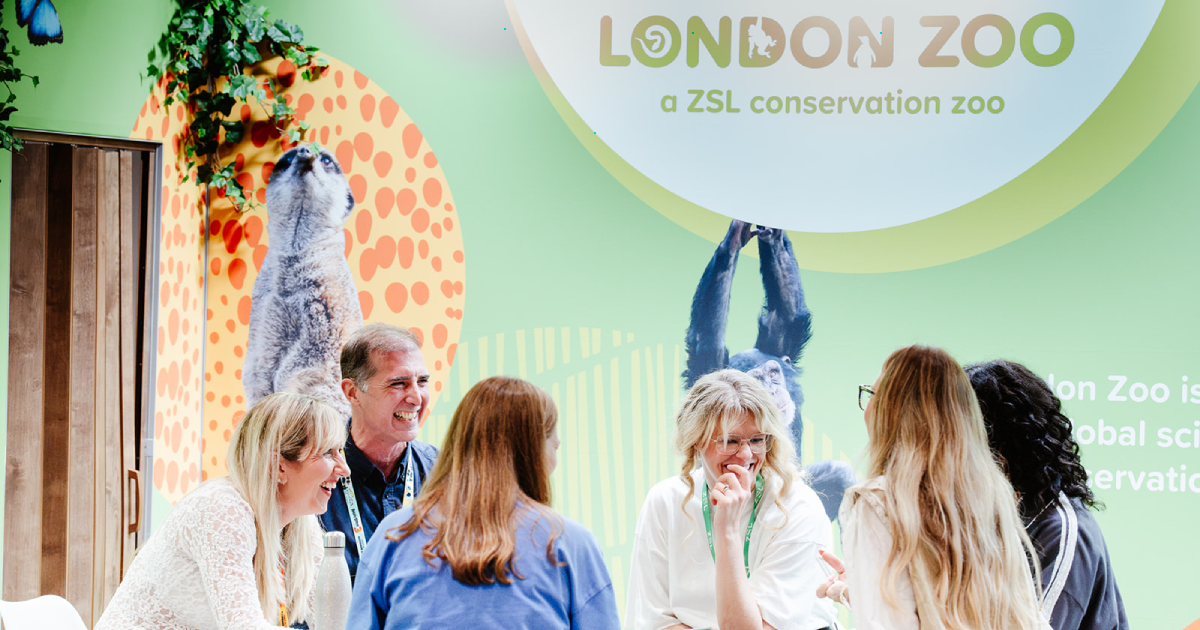
“As a non-profit organization, we rely heavily on admissions income and fundraising and grants and even things like retail and secondary school in our sites to directly fund our conservation and scientific,” said Abbie Taylor, Brand Licensing Manager at the London Zoo and the Zoological Society of London. “But licensing allows us to diversify income. Our whole purpose is to inspire people to protect wildlife. Licensing allows us to take that magic and wonder of the zoo outside of the zoo.”
That ability to expand a brand outside its core business also applies to IP that has long ceased to exist in the form that made it famous.
Apple Corps and Universal Music Group, for example, are opening The Beatles at Savile Row, the first official fan experience that is due in London in 2027, 53 years after a U.K. court finalized the band’s breakup. The building, the roof of which was the venue for the band’s last concert in 1969, will feature artifacts from The Beatles’ history displayed across seven floors along with licensed merchandise.
“Reaching new unexpected places for The Beatles and doing something The Beatles would stand behind is a good position to come at it from,” said Miranda Langford, Head of Marketing at Apple Corps. “We don’t say yes to everything.”
That role of gatekeeper for a licensor’s brand also applies to retail. European sales of licensed merchandise and services increased 3.8% to $82.4 billion in 2025, according to data from Licensing International’s new Global Licensing Industry Study. Western Europe accounted for $70.1 billion (up 4%) while Eastern Europe rose 3.2% to $12.3 billion. The increased sales were underscored by 15,000-store Carrefour, as the retailer invests heavily in licensed goods, but with a proviso.
“You can have a very good license, but if it is not bringing the right timing, we won’t do it,” said Marianne Lesimple, Director of the chain’s Toys and Leisure Group.