The Blurring of Holiday Sales
By Mark Seavy
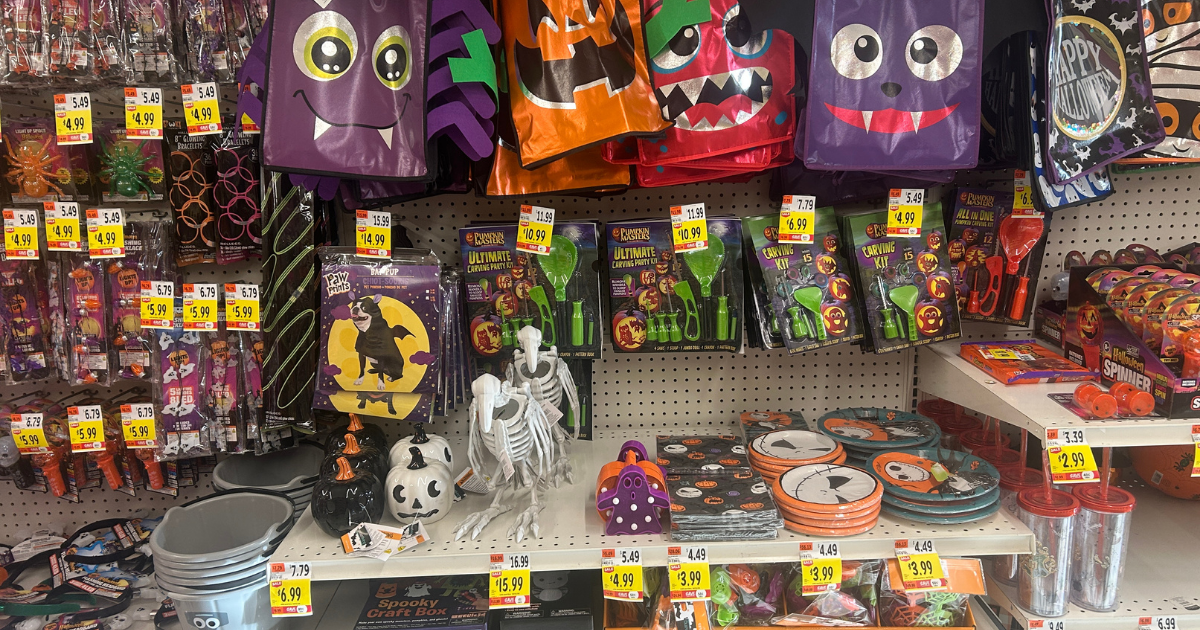
The continual creeping up of holiday retail promotions has turned into a full-scale sprint that is as much about marketing as it is product sales.
“Holiday creep” entered the retail vernacular in the 1980s and has been a staple for many years as the borders between Halloween, Christmas, Easter and other promotional periods blurred.
The five-store Brown Thomas chain in Ireland, for example, installed a Christmas display starting in August and “Summerween” has become part of retail parlance starting in July. And tabletop suppliers said retail floor sets for the holidays have filtered in late August, a full three weeks ahead of what had previously been operating procedure.
There are some guardrails since mass retailers typically limit the seasonal aisles, where Halloween and Christmas merchandise appears, to back-to-school merchandise in August. But that doesn’t mean retail marketing machines aren’t at work in trying to make the holiday sales period top of mind for consumers.
“It is really about marketing since retailers want to excite consumers and get them to buy earlier,” a licensing executive said. “But that doesn’t happen much in a substantial way when it comes to sales since many of these periods, like Halloween and to some extent Christmas are last minute purchases and that is still where the bulk of the business will be.”
Yet that hasn’t stopped suppliers from trying to jump start the business.
Funko, for example, has long had a “Funkoween” promotion for a limited period in May that highlights Halloween-themed Pop! collectibles. It’s an event that is planned 12-14 months in advance, said Jason Bischoff, VP of Licensing and Business Development.
“We think about Funkoween in a traditional [product] cycle but living in curation so that if something explodes, we can have product,” Bischoff said. “It is about being where the fans are rather than a seasonal play. We treat Funkoween as a standalone campaign and would expect incremental sales because we have curated it that way.”
Spencer Spirit Holdings, meanwhile, in seeking to capitalize on its 1,500-store Spirit Halloween pop-up locations that typically open in August, is expanding a Christmas version.
Spirit Christmas is expected to open the bulk of its 44 locations in November across 15 states with seven (Florida, Illinois, New York, Ohio, Pennsylvania, New Jersey and Michigan) having four stores each. Many of the pop-up stores are former locations of other retailers including JoAnn Fabrics, Forever 21 and Bed Bath & Beyond.
Like Spirit Halloween the stores will be replete with animatronic figures, this time including Frosty the Snowman, Peanuts characters, and Rudolph the Red-Nosed Reindeer. Those will be in addition to throw pillows, fleece blankets, apparel (socks, loungewear, hats), pet costumes and toys under variety of licenses including Skydance’s The Year Without Santa Claus and Elf, Nickelodeon’s SpongeBob SquarePants, and others.
The marketing campaigns come as holiday retail sales are expected to exceed $1 trillion this year, with spending driven by higher prices tied to tariffs and materials costs. Consumer prices rose 3.7% in September from a year earlier. The National Retail Federation forecast retail sales during November and December will grow 4.2% over 2025. But at the same time the organization’s annual consumer survey found that 56% of holiday shoppers say the state of the economy will affect their spending plans. NRF also found that 43% of shoppers plan to begin shopping before November, with half of shoppers citing a need to spread purchases across their budgets.
Bain & Company forecast that holiday retail sales will increase 4.5%, supported partly by tax refunds. Bank of America, however, said half that benefit would be consumed by higher gas prices. Mastercard projected holiday sales would rise 5.5%, while Deloitte forecast revenue would jump 4% to 4.8% to $1.7 trillion. Holiday sales rose 3.1% last year to $972 billion.
“As they look to get more out of their dollars, we continue to see value-seeking behaviors across income levels, including switching among brands and retailers and using promotions to manage spending,” said Natalie Martini, vice chair of Deloitte and U.S. retail and consumer products leader. “These behaviors are expected to shape how consumers approach holiday shopping this season.”