



Pop Culture Stores Gain Footing in Strip Malls
By Mark Seavy
Strip malls are seeing a surge in interest as retailers seek new means to adapt to changing consumer spending habits.
It’s a gradual shift, but one that is a strategic pivot for brands that have traditionally been wedded to large indoor shopping malls and urban retail centers. It also comes as consumers increasingly report they are attracted to experiences as much as (if not more than) products.
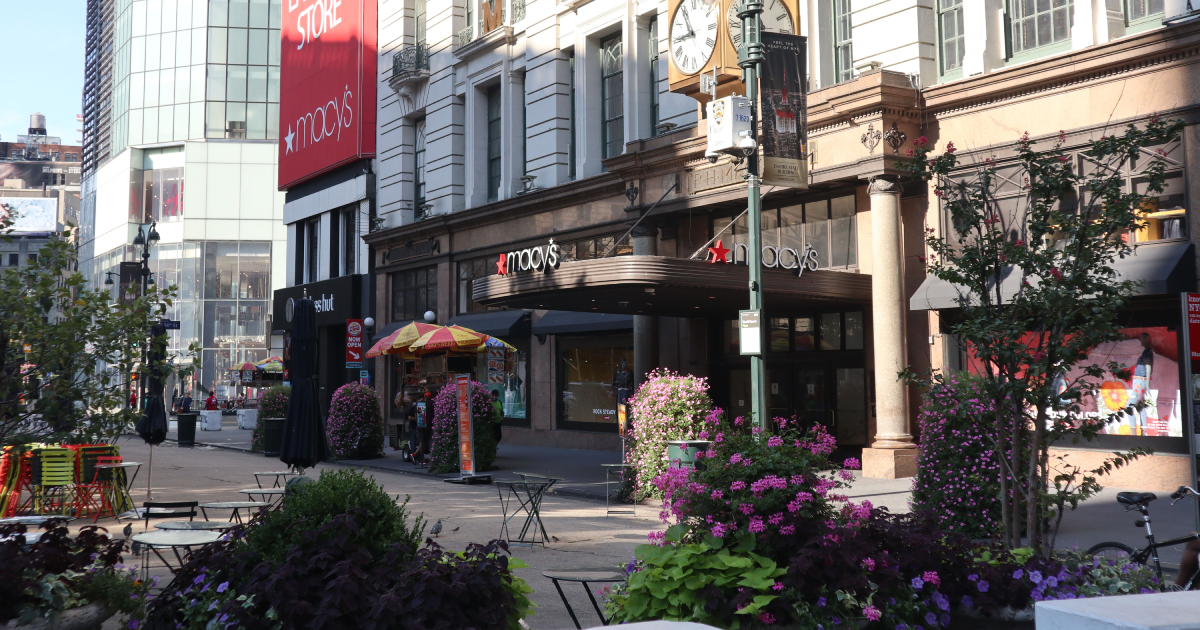
And the move has gathered speed as indoor malls struggle to fill space that opened following the departure of anchor tenants like department store chains Lord & Taylor, Macy’s, JCPenney, and others. Macy’s has even opened its own off-mall locations.
Indoor malls have long been home to pop culture retail chains, many of them competing within a short distance of each other in the same location. The Macerich Co.’s Danbury Fair Mall in Danbury, CT, for example, has Five Below, Hot Topic, Miniso, Newbury Comics, and Spencer’s, all near each other. Yet some of these traditionally mall-based retailers are now expanding to strip centers as they seek more space.
Hot Topic plans to spend $180,000 renovating a 5,023-square-foot location in the Southpark Meadows strip center in Austin, TX. Construction is expected to be completed by January, according to documents filed with the Texas Department of Licensing and Regulation. It is the second Hot Topic off-mall location in the area, following one at the Tanger Outlets in San Marcos, TX. Hot Topic, which has over 600 stores and was recently acquired by Spencer’s, has more than 10 off-indoor mall locations ranging in size from 3,000 to 5,000 square feet, the first of which opened in the Mountain Grove Shopping Centre in Redlands, CA.
In doing so, Hot Topic has installed shop-in-shop displays for brands like Thrilljoy and Kaleidos Creative, both of which are led by former Funko executives, and Australia-based Glitch Productions. It is also weighing strip center stores for its affiliate Box Lunch, which has opened about 300 locations since launching in 2015.
The increased attractiveness of strip centers, of which there are 68,000 in the U.S. alone, is underscored by their getting about 1.3 billion visits each month, according to the International Council of Shopping Centers. Annual visits to strip centers have surged 18% in recent years, while traditional malls have struggled, according to RetailStat.
“The strip centers have been a good success story for Hot Topic and the question has been with the teen consumer—a Hot Topic staple—in terms of how much are they shopping in these strip centers as destination retail versus a mall environment where there is an impulse component to it,” a licensing executive said. “The teen shoppers post-Covid have transitioned to the lifestyle entities where they can have that shared experience. Hot Topic and Box Lunch are more of a destination retailer and with the larger stores they can do a little bit more entertainment retail. They also partner with studios in creating an immersive environment and it is about how they look toward that for the future.”
The strip center locations also represent a growing opportunity as newer retail competitors like Miniso and Pop Mart expand globally.
Miniso, which had 351 stores in the U.S. at the end of 2025 and planned to open 76 more this year, tends to operate 650- to 1,600-square-foot locations in enclosed malls but does have freestanding outlets. It also has merchandise from 180 different brands. Overall, Miniso had 8,674 stores globally under a range of brands including TopToys.
Pop Mart, on the other hand, entered the U.S. in 2021 and opened 43 stores as of last January ranging in size from 800 to 1,200 square feet. Many of thse stores are in indoor malls under long-term lease agreement with Simon Property Group and Taubman Centers, but there are also flagship locations like the one in New York City. Pop Mart has 1,047 stores globally along with 320 licensed kiosks in department stores, airports and other locations.
Both chains focus on visual merchandising and an experiential feel, according to licensing industry executives.
“Many of the pop culture stores were initially built off taking a small amount of square feet and making significant sales volume off that,” a studio licensing executive said. “The retail customer preference has shifted somewhat to wanting to have a little more room to breathe. You see that with some of the retailers like Miniso and Pop Mart that are coming into the market and offering a boutique feel where licenses are isolated on tables and there is a showy presentation.”
These pop culture stores also find themselves competing with an increasing array of limited-time locations. Temporary retail spaces generate about $80 billion in annual sales in the U.S. with pop-ups accounting for $15.6 billion in 2025, according to Capital One Shopping Research. Pop-up events can boost sales by 35% and typically cost less than $5,000 to open, according to Capital One.
Go! Retail Group, for example, has operated pop-ups for Disney Store Limited Time in Pittsburgh, PA and Paramus, NJ as well as for Toys “R” Us and Babies “R” Us.