



Textile Companies Cuddle Up with Licensing
By Mark Seavy
With consumers demonstrating increased brand loyalty, the textiles industry is broadening its licensing efforts.
That’s because while home textiles companies like WestPoint once focused on internally developed brands like Martex, a new cadre of suppliers have enlisted licensed labels to connect with shoppers.
To some extent, this shift signals the return of all-in-one suppliers that provide a range of products across comforters, quilts, sheets, decorative pillows, throws, and other products rather than individual items. That was very much the case with U.S.-based textile mills, but the strategy changed when those companies shut down as production moved overseas. Now, many of those overseas suppliers have broadened their reach across multiple categories either through acquisitions or expanded production.
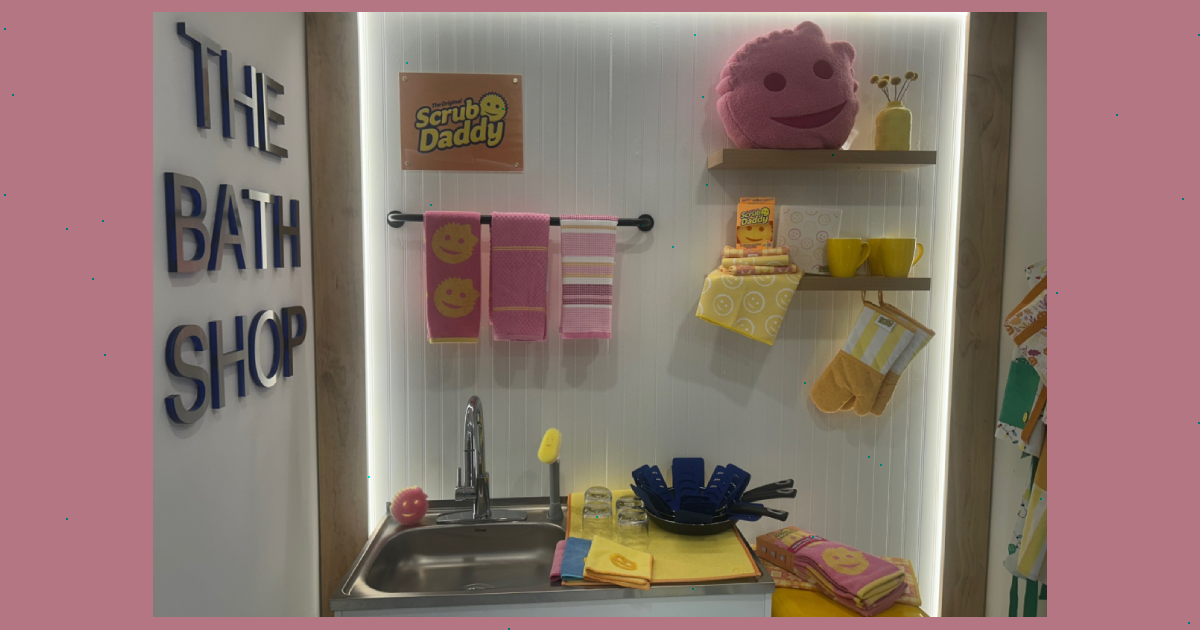
Britannica Home Fashions, for example, increased its licensed brands across multiple bedding categories at the recent New York Home Fashions Market Week. The company expanded from a base in Decker Brands’ Uggs and Pendleton to include Norman Rockwell, U.S. Army, Hautman Brothers, British fashion designer Cath Kidston, and Apartment Therapy Media’s Dorm Therapy brands. At the same time, it is winding down agreements with the Laura Ashley and Nicole Miller brands, while “reimagining” its license with David Peyser International’s Weatherproof brand across comforters, quilts, decorative pillows, and throws (compared to a former base in outdoor throws and pillows), CEO Normand Savaria said. It also has a new licensing agreement with Aaron Krause’s Scrub Daddy to bring cleaning brand into outdoor products like decorative pillows and mats.
At the same time, Town & Country Living will launch a licensed line of Lenox brand bathroom products including towels, floor mats, and wash cloths while closing out agreements with the late children’s author Eric Carle and Ken and Deb Polanco’s Sanctuary apparel brand, said Judi Alvarez, VP of Licensing and Marketing. The company is also weighing an expansion into bedding either through acquisitions or increased production.
“It has been a natural change because when the industry switched from U.S. mills, which did all of the [textiles] categories, the industry went the way of specialization,” said Savaria. “Now, all those sourcing companies have grown and have gone back to covering a lot of product categories. In the past there were a lot of companies covering each category because you needed them, but now with consolidation it is easier to manage the business both for suppliers and licensors.”
Consolidation is occurring at those same suppliers as retailers and consumers show renewed interest in national brands. Target, which in recent years has focused on building up its home textiles offerings under the private label Pillowfort (children’s bedding) and Threshold (home décor) brands, has turned some of its sourcing expertise on licensed brands for direct-to-retail products, home textile executives said.
Pem America, meanwhile, is readying a line of towels in 28 colors under Iconix International’s Royal Velvet label (originally owned by Pillowtex) for Bed, Bath & Beyond. Pem America is also launching bedding with interior designer Sabrina Soto, whose brand got its start online with Target in 2015, as well as launching a signature line with footwear designer Sam Edelman.
Evidence of retail demand for licensed and national brands can also be found at dollar stores like Dollar General and Family Dollar, the buyers from which were at the recent home textiles market. Dollar General has also deepened its selection of national brands with the recent addition of Revman International’s licensed bedding under Kontoor Brands’ Wrangler brand.
“We live in such a [product] drop society now where the brands we follow have a collection drop and licensing and consumers will flock to those sales,” said Emily Smith, Director of Brands and Marketing Strategy at Britannica. “Whether consumers had considered buying the line before or they love the brand they can now get it. That is a big play into licensing for brand loyalty and having tangible products from it.”
That brand loyalty could be tested in the coming months as home textiles suppliers grapple with rising materials and shipping costs. Cotton prices have increased 1.8%, according to Expert Market Research, while polyester costs have jumped 5.5%. The result will likely be 2-10% wholesale price increases at Britannica, much of which will likely be passed on to consumers, Savaria said.
Meanwhile, Lenzing Group (a supplier of eco-friendly wood pulp-based Lyocell fiber under the Tencel brand to home textiles) has shifted its focus to premium products after closing a plant in the U.K. and seeking investors for another one in Austria. Much of the Lyocell fiber at the affected plants is produced for apparel. Fiber for home textiles is largely made in Thailand and Austria.
“We do the best we can [on price] and our customers are feeling the cost increases. The polyester prices have been hit the hardest by the war and the changes in shipping routes,” said Walter Bridgham, Senior Business Development Manager for Home & Interiors at Lenzing Group, which is increasing prices 5-10% for its fibers due partly to spinning mills raising their prices 5% amid the higher cost for yarn. “It is a trickle up effect and raw materials costs have gone up for us, so we have to reflect that in the price.”