



User-Generated Content and AI Raise IP Concerns
By Mark Seavy
User-generated content (UGC) is flooding a market where artificial intelligence (AI) is increasingly taking hold, raising an array of issues for IP protection. Now, in addition to fans making art inspired by their favorite brands the old-fashioned way, they can also create new content in just seconds using AI.
Some brand owners, however, are implementing new strategies that allow them to take advantage of UGC and fan art, rather than trying to remove it from various websites and social media platforms.
This is significant because UGC is being applied to everything from apparel to home goods, with fans either purposefully or unknowingly purchasing the unlicensed products. And while UGC made by individual artists so far appears to surpass AI in terms of quality, the gap will likely narrow in the years ahead and provide an even greater challenge for IP owners seeking to fight against counterfeits, according to executives at Licensing International’s recent Brand Protection Summit in Washington, D.C.
Hasbro’s My Little Pony brand, for example, has more than three million pieces of UGC on just one of the well-known fan art sites. The sheer quantity of UGC raises the question of whether IP owners should work with the fan art community or respond with a flurry of cease-and-desist letters and takedown notices.
“Traditional licensing demands ‘permission first, create later,’ which kills creativity before it starts,” Mod Inc. Founder Joseph Pinho , a speaker at the Brand Protection Summit, said in a LinkedIn post. Pinho’s company serves as a conduit between artists and brand owners. “Fan artists can’t afford legal teams to navigate IP frameworks, so they create in the shadows. Brands miss out on their most innovative designs, the ones their communities are already creating. The result? The systematic exclusion of passionate, talented artists from legitimate revenue streams.”
The result, Pinho argues, is a need for online creators to align their talents with IP owners, who in turn can work to foster fan communities and harness their abilities. Mod’s Discord-native strategy, for example, is designed to bring together artists and IP owners to co-create merchandise based on standard licensing contracts with royalty rates.
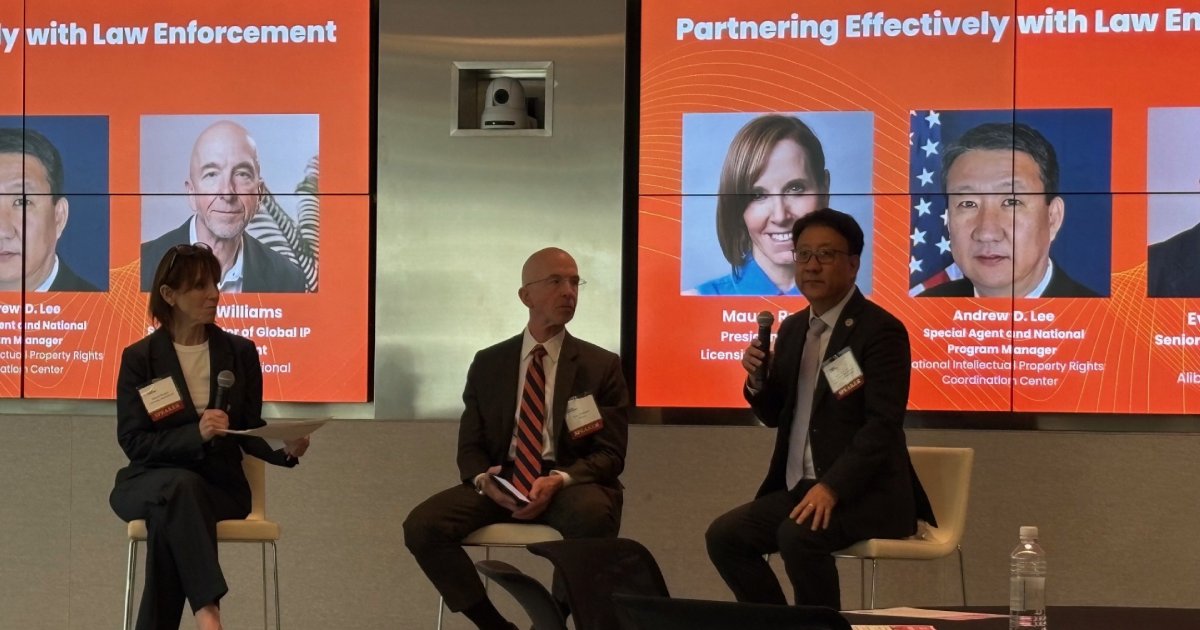
“I am not sure we can stay ahead of the counterfeiting unless we continue to educate the public, law enforcement, and the judiciary about the dangers of counterfeits and establish a process within each company ahead of reaching out to law enforcement,” said Andrew Lee, Special Agent and Program Manager at the National Intellectual Property Rights Coordination Center.
Lee added that brand owners face the significant task of having to constantly monitor every emerging eCommerce platform. And the difficulty of staying ahead of bad actors will only grow. The UGC market alone is forecast to increase 29.4% annually to $32.6 billion in 2030, up from $7.1 billion last year, according to Grandview Research.
This increase comes as brands and companies accumulate mentions or visual product references, including short videos, from social media and other sources and repurpose them for sales, advertising, and marketing.
Additionally, fans, consumers, and bad actors are all moving at “the speed of culture,” with ever-changing strategies and trends that challenge IP owners’ efforts to protect their trademarks, Pinho said. For example, many fan artists don’t post products on websites at all, instead simply posting their art and then making sales inside the direct messages on social media platforms.
“Ultimately, the only way you will get ahead of the counterfeiters is to also go after their suppliers,” said Evan Williams, Senior Director of Global IP Enforcement at Alibaba International. “We have a lot more challenges because everything is faster, but all the eCommerce platforms also have more tools than ever before. AI is both a weapon and a tool and scalability is a concern for AI. eCommerce communities really get it now in that they don’t make money off counterfeits [and are becoming significant partners in the fight against bad actors].”
Indeed, leaders in eCommerce and the broader fan communities continue to demonstrate their understanding of the cost of counterfeits. Epic Games, home to Fortnite, has a stark warning on its site about fan art and counterfeiting, for example. And an artist who operates under the name Deimos Art on Instagram and Deismos-Remus on DeviantArt has gained plaudits from Josh Sawyer, Game Director for Bethesda Softworks’ Fallout title, for his art inspired by Fallout: New Vegas because of its respect for the source material.
“It is one battle after another,” said Paurav Shukla, Professor of Marketing and Department Head of Research at Southampton Business School. “The key is proving ownership and, [while fans and] influencers are seeing the benefits with dupes, they could be convinced to see the benefit of licensed products and focus on being certified as authentic.”