



How Italy Struck Gold with the Winter Olympics
By Roberta Nebbia, Italy Managing Director at Licensing International
As the Olympic and Paralympic Games continue to evolve into global cultural platforms, licensing, eCommerce, and merchandising have become increasingly strategic tools for extending the emotional connection between the event, the host country, and audiences around the world.
In this interview, Betty Aldini, Head of Licensing, eCommerce, and Merchandising at the International Olympic Committee (IOC), explores how the Milano Cortina 2026 Winter Olympics’ licensing programme balanced commercial performance, storytelling, sustainability, and local identity to highlight the role of Italian excellence, carefully selected licensees, and an integrated omnichannel strategy.
Aldini and her team worked closely with the organising committee for the Milano Cortina 2026 Olympic and Paralympic Games (in particular with Moris Franco Calasso, Head of Licensing at Fondazione Milano Cortina 2026, and Stefano Paolo Gili, Head of Retail at Fondazione Milano Cortina 2026) to build a programme capable of connecting the Olympic and Paralympic values with tangible products, memorable retail experiences, and new digital forms of fan engagement.
Which indicators provide the most meaningful information on the public’s response to the licensing programme?
Betty Aldini: To assess the appeal of the Olympic and Paralympic Games’ licensing and retail programme, at the IOC we focus on a few key indicators. Firstly, we look at the number of visitors in official stores and then how many of these visitors actually purchase items. In Milan, around three million people visited the official stores during the Games, generating approximately 350,000 transactions. The attractiveness of the megastore destination at the Piazza Duomo Megastore proved particularly successful and attracted around one million visitors. We also witnessed demand for the iconic products that are linked to this specific edition of the Games. Among the most popular items were the mascots, official apparel collections, and pins, which are a long-standing symbol of friendship and cultural exchange among athletes, delegations, and fans. Finally, winter sports-related products such as ice hockey jerseys and pucks were also very popular.
Another key indicator is digital sales performance, with a focus on reach and international demand. The Olympic Shop, which is the IOC’s global official online store outside of China, recorded 3.8 million visitors and around 35,000 orders. It is particularly interesting to note that a significant share of purchases came from abroad (Italy represented almost 30% of sales), with Germany, the United States, and Japan among the most active markets. We registered strong performances in China as well, where we have a dedicated online store.
As a final point, engagement on digital platforms is also a key indicator. Through multiple activations and partnerships across digital media, we engaged audiences worldwide. For example, the Milano Cortina 2026 activation on Brookhaven, the top role-playing game on Roblox, generated very strong interest, particularly among younger audiences (mostly under the age of 13). The custom Olympic area created in-game engagement from more than 60 million unique users, over 600 million visits, and1.2 billion minutes spent as well as 3.3 billion impressions and millions of interactions. While the top market was the US, it also reached markets with traditionally lower interest in winter sports, such as Brazil, Indonesia, Mexico, the Philippines, and Argentina.
What are the strengths of the licensing program?
Betty Aldini: Official products are often the first point of contact between fans and our brand, becoming tangible and lasting symbols of the Games. This connection goes far beyond the Closing Ceremony, and merchandising becomes a meaningful memory that continues to promote the Olympic values of excellence, friendship, and respect over time. Quality and sustainability are core pillars of the licensing programme, and that is reflected in the excellence of the companies involved.
The coexistence of local and global licensing programmes is an additional strength that allows complementary activities. The local programme, developed by the Organising Committee and supported by the IOC, works alongside the IOC’s global licensing framework, ensuring worldwide distribution via the Olympic Shop and dedicated international licensees while expanding product diversity and geographic reach. This ensures a strong link to the host country and its unique heritage, bringing authenticity and cultural value to the products. Italian culture was deeply embedded in the Milano Cortina 2026 product development, celebrating local traditions through iconic creations that are particularly valued by international audiences.
What was the role of the mascots?
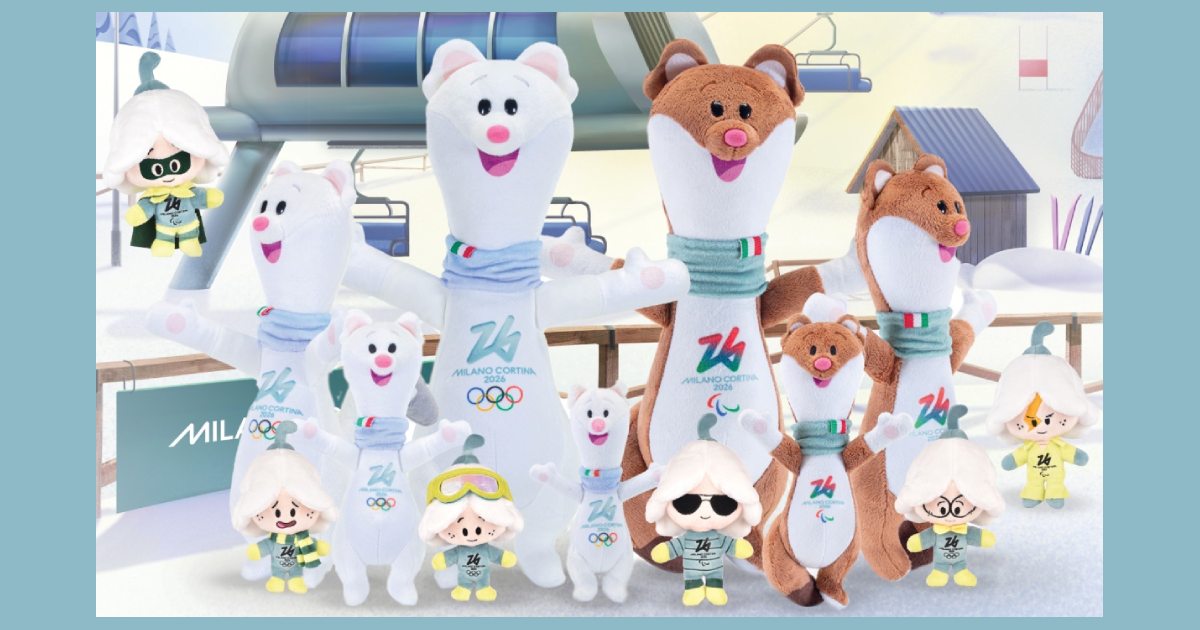
Betty Aldini: Traditionally, in every edition of the Olympic and Paralympic Games, mascots have been an important tool for engaging audiences, particularly young audiences. They are conceived both as an engagement and storytelling tool, aligned with the identity of the Games. From a commercial perspective, mascots are one of the major drivers of the licensing programme. For every Games, they are consistently among the most popular products in demand, standing out in terms of sales volume and desirability. Mascots also play a central role as a vehicle for storytelling. The Milano Cortina 2026 Organising Committee worked closely with local licensees to ensure that mascot-inspired products convey the personality of the host country and its territory. At the IOC, we ensured that the same principles were applied to the global items for consistency. The mascots Tina and Milo represent two ermine and were chosen through a national contest among school children. Tina, the Olympic mascot with a lighter coat, stands for creativity and ambition. Milo, the Paralympic mascot with a darker coat and missing paw, represents resilience and inclusion. As Alpine animals, they symbolize adaptability and connection to the host region.
Which product categories were the most important, strategically?
Betty Aldini: The licensing programme linked to the Olympic and Paralympic Games is traditionally very broad, as it must serve both on-site visitors and those following the event from home, as well as collectors and occasional consumers. For Milano Cortina 2026, the collection exceeds 1,800 products spanning apparel, accessories, toys, collectibles, homewears, and FMCG.
Among the most meaningful and strategic segments, I would highlight apparel (for example, international Olympic team uniforms—including Team USA, Team Canada, Team Germany and Team GB—were available in dedicated stores in Milan, significantly enriching the overall offering and consumer experience), pins (Milano City Pins telling the story of neighbourhoods and city symbols were distributed free at key locations and others were sold in official stores), and the mascots (gifting plush mascot toys to medalists boosted their visibility, emotional appeal, and commercial success worldwide).
What is the approach to the selection of licensees?
Betty Aldini: We, the Milano Cortina 2026 organizing committee, and the IOC licensing teams adopted a highly selective approach when choosing licensees, both locally and globally. The process was rigorous and based first and foremost on compliance with the IOC’s Code of Ethics and sustainability criteria, implemented by the Milano Cortina 2026 organizing committee. This is not simply a set of rules, but a values framework guiding every stage of the collaboration, from material selection and production processes to the broader social and environmental impact of the products. Only companies able to demonstrate full alignment with these principles are considered, ensuring a transparent and responsible supply chain in line with international standards.
Beyond sustainability, alignment with Olympic and Paralympic values is a key selection criterion. Our common objective is to deliver a merchandising experience that is not only commercially successful, but also culturally and emotionally engaging, capable of building lasting memories and a strong sense of connection with the Games.
A further important aspect is the ability to enhance local and national identity. For the Milano Cortina 2026 Games, in particular, the licensing team partnered with a selection of outstanding Italian companies. This included renowned brands such as Armani (EA7), Bialetti, Bric’s, Carpisa, F.lli Marchesi, Kiko, Lazzaroni, OVS, Panini, Pastiglie Leone, Thun, Trudi and Yamamay. In addition, they cooperated with local businesses that created items strongly linked to the territory, such as typical Dolomites chairs, Valtellina-style footwear, and other objects symbolic of regional culture and craftsmanship. This approach allowed us to internationally showcase a licensing programme deeply rooted in local culture, craftsmanship, and excellence through the Games.
In terms of distribution, what was the balance between physical, digital, and temporary stores?
Betty Aldini: From a distribution perspective, we adopted a strategic, multi-channel approach, working closely with the Milano Cortina 2026 retail team, collaborating with key retail licensees across physical retail and global eCommerce. On the digital side, the Olympic Shop, managed by the IOC global eCommerce licensee, ensured worldwide access to the comprehensive range of collections, offering a seamless and qualitative user experience for fans globally. At the same time, in China, the IOC’s Worldwide Olympic partnership with Alibaba allowed us to sell products through the Olympic Shop on Tmall, the country’s top digital commerce platform. In addition to official mascots, we offered exclusive collections designed for local consumers, helping us better align with cultural preferences and boost engagement and appeal in one of the world’s most vibrant markets. Overall, the distribution strategy was carefully balanced across physical retail, eCommerce and experiential formats, enabling us to meet the expectations of a global audience while enhancing the Olympic brand through strong partnerships, innovation, and a clear focus on local market dynamics.