


How to Protect Your Brand Against Deepfakes
An Executive Voices Blog by Charlotte Cresswell, Co-Founder and CEO at IProtect Global
Emerging technologies are opening up endless new opportunities for the brand licensing industry, but they are also introducing new challenges. One example that is particularly concerning is the growth of deepfakes.
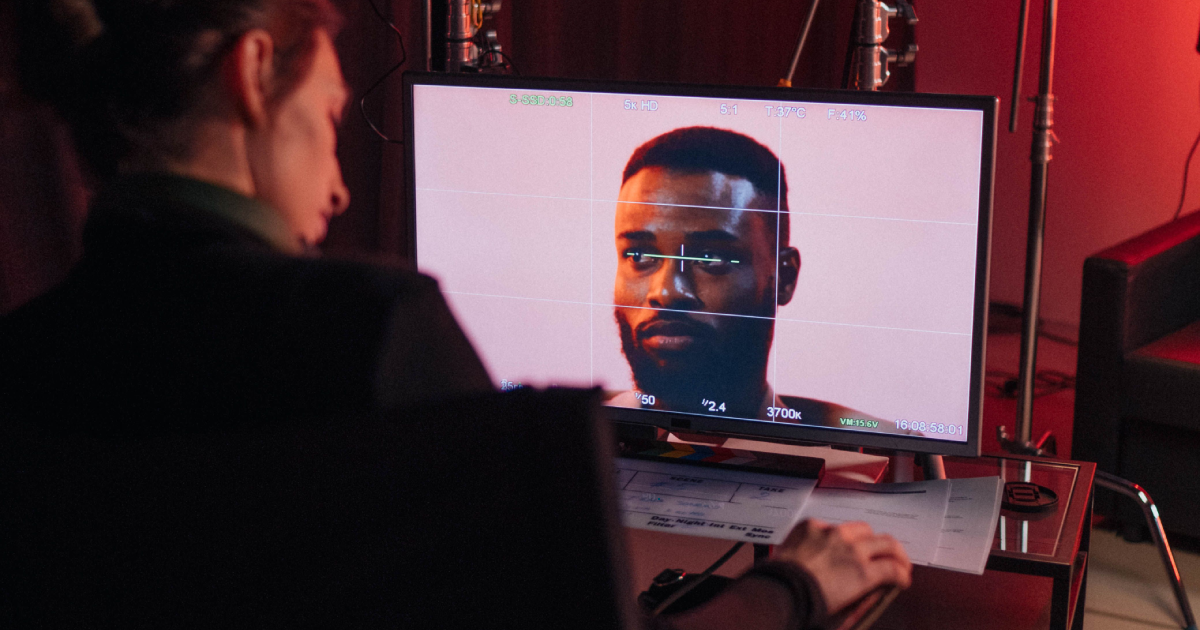
A deepfake is synthetic media in which a real person’s face, voice, or body has been generated or altered by AI so they appear to say or do something they never said or did. The term comes from “deep learning” plus “fake,” and it originally was used to describe face-swapped videos. Since then, it has been broadened to cover voice clones, fully AI-generated videos of a real person, and anything in between.
The distinction that used to matter—real footage that’s been manipulated versus footage generated from nothing—has more or less collapsed. From an enforcement point of view, it doesn’t much matter which technique was used. What matters is that a viewer believes they’re looking at a real person or a real brand asset, but they aren’t.
The way deepfakes are made has changed, but the most important shift isn’t technological sophistication—it’s accessibility. What used to require a technical hobbyist, a decent GPU, and a few days now takes a consumer app and a few minutes. Another important shift is that deepfakes no longer exclusively target real people. They are now also being made of fictional characters and animated brands.
In fact, this version of deepfakes is growing faster than celebrity deepfakes. Fine-tune a model on frames from an existing show and you can produce endless new “episodes.” Clone the voice actor, and you have dialogue too.
The result is entire channels of unauthorised character content where the brand owner had no involvement and no control over what those characters are made to say. A lot of this content is aimed at children and much of it is monetised. Additionally, it’s incredibly difficult for audiences (especially younger ones) to differentiate between these deepfakes and the real content.
There are several significant risks associated with deepfakes, including:
Licensing Devaluation
If unauthorised versions of your character are free and everywhere, the exclusive license you sold is worth less. Licensees notice, and they ask why they’re paying. Talent contracts increasingly warrant that you can control likeness use—if you can’t police it, you’re exposed contractually.
Brand Safety by Adjacency
When your character or your talent appears in violent, sexual, or extremist content. With children’s IP this is acute, because the young audience has no filter for it.
False Endorsement
This is by far the biggest volume, and it involves a cloned celebrity or character fronting something like an investment scam, a supplement, or a crypto product. The consumer loses money and blames the celebrity or character.
Data Contamination
Fakes get indexed by search engines, scraped into training sets, and become the basis of what an AI assistant tells the next person who asks about your brand. Left alone, a lie becomes the record. Correcting the online record is now part of brand protection, because the corrected record is what gets indexed next.
However, the real damage often isn’t the video—it’s the fortnight your legal, communications, and social teams lose to it. And unfortunately for brand owners trying to protect their IPs from deepfakes, there is no single law addressing the issue. Instead, it’s a patchwork.
In the U.S., the traditional route is right of publicity, which is state-level and inconsistent. For example, Tennessee’s ELVIS Act extended it explicitly to voice while California added provisions on digital replicas of performers. But the significant development is federal, with the NO FAKES Act reintroduced in May 2026 and clearing the Senate Judiciary Committee on a unanimous vote. It would create a federal IP right in a person’s voice and visual likeness, with a notice-and-takedown process. It would also make platforms liable for hosting unauthorised replicas where they know the person didn’t consent.
In the EU, Article 50 of the AI Act applies from this month. It requires providers and deployers to make clear when audio, video, images, or text are AI-generated, with a reinforced disclosure duty for deepfakes. Fines reach €15 million or 3% of worldwide turnover, and it catches U.K. businesses serving EU users too.
But platform policy moves faster than legislation. Every major platform now has a manipulated-media and likeness policy, and the overwhelming majority of removals happen there rather than in court. This is important because most clients don’t want litigation; they want the content gone this week.
There are several steps brand owners can take to protect against deepfakes:
Document Your Assets First
You can’t enforce what you can’t evidence. This should include reference imagery and audio for your talent and characters, a registry of official channels, and a clear ownership chain. Formal registration of name and likeness rights is becoming a real market, with insurers now willing to underwrite that risk.
Add Provenance to Your Own Content
This includes content credentials and invisible watermarking on official releases. As fakes proliferate, being able to prove something is real becomes just as valuable as proving something is fake.
Monitor Continuously
The working toolkit is perceptual hashing to catch near-duplicates and re-uploads, face and voice embeddings to find your talent’s likeness across platforms, audio fingerprinting, and artifact-detection models.
Automate the Takedown Pipeline
Volume is the problem and a single well-argued case matters far less than throughput and trusted-flagger relationships with the platforms.
Attack the Money, Not Just the Content
Deepfake scam operations are businesses that encompass ad networks, payment processors, affiliate programmes, and registrars. Cutting revenue kills them faster than removing videos does.
Moving forward, volume (rather than sophistication) will define the global brand licensing industry’s efforts to fight against deepfakes.
The quality ceiling is already high enough; what’s changing is that it’s approaching zero cost and moving into real time, which means live video and voice impersonation on calls. Enforcement will keep shifting from content to distribution and payment. Platforms will carry more liability, which will push them toward better automated tooling, which helps rights holders.
But perhaps the most interesting development is that a licensing market for digital likeness is forming, with estates, athletes, and performers licensing authorised replicas. That turns brand protection into rights administration, because you can only monetise what you can credibly police. The brands that get their detection and provenance in order aren’t just defending an asset—they’re creating a licensable one.
The risk nobody plans for is the reverse problem: as fakes become normal, real footage gets dismissed as fake. That means brands should be preparing to prove authenticity, not just disprove forgeries.
IProtect Global offers fully integrated enforcement solutions across counterfeiting, copyright infringement, and deepfake abuse—three of the fastest-growing threats to intellectual property in the world today. IProtect Global combines AI-powered detection, Schedule A litigation expertise, copyright revenue recovery, and deepfake enforcement under one roof, on one performance-based model. IProtect Global was founded by IP enforcement specialists with backgrounds spanning Schedule A litigation, brand protection technology, and international rights management. We exist for one reason: to make sure the people who create and own intellectual property keep what is rightfully theirs.