




Dollar Stores Bank on Lower Prices
By Mark Seavy
Dollar and discount retailers are deploying even lower prices to attract consumers amid rising gas costs and continued economic uncertainty.
The strategy to expand upon typical price-conscious efforts was evident as Dollar General, Dollar Tree, Dollarama, and Ollie’s Bargain Basement released quarterly earnings.
And while consumers (including those with household incomes of $100,000 or more) have increasingly been attracted to prices that are 3-4% below those offered at mass retailers like Walmart and Target, the current U.S. economy is causing customers to make fewer and more focused shopping trips, retail executives said. As a result, store traffic increased by less than 1% at many dollar and discount retailers.
“In more rural and suburban markets, the rapid spike in gas prices has led to some trip consolidation, which is impacting store traffic,” Ollie’s CEO Eric van der Valk said. “It began in March, coming out of the geopolitical environment and coupled with uncertainty of the economic backdrop, [and] we did see a meaningful change in shopping patterns.”
That declining store traffic is most evident among the low-income consumers that are key to dollar and discount chains, retail executives said. As low-income consumers focused on food items and deferred purchases on nonessential products, households with incomes of $100,000 or more “traded down” in many cases to take advantage of discount prices, the executives said. That shift in spending enabled retailers to offset any business lost with low-income consumers through this influx of higher-income customers.
“Consumers and suppliers are under pressure and inventories in many cases are out of balance,” said van der Valk, whose chain’s Ollie’s Army loyalty program has 17.5 million members that account for 80% of the 1,070-store chain’s annual sales. “Suppliers are more motivated to move product. That is resulting in larger deals being available. We’re continuing to see an increase in both the quantity and the quality of the deals.”
Amid these closeout deals, retailers posted strong toy sales and promoted sub-$1 items.
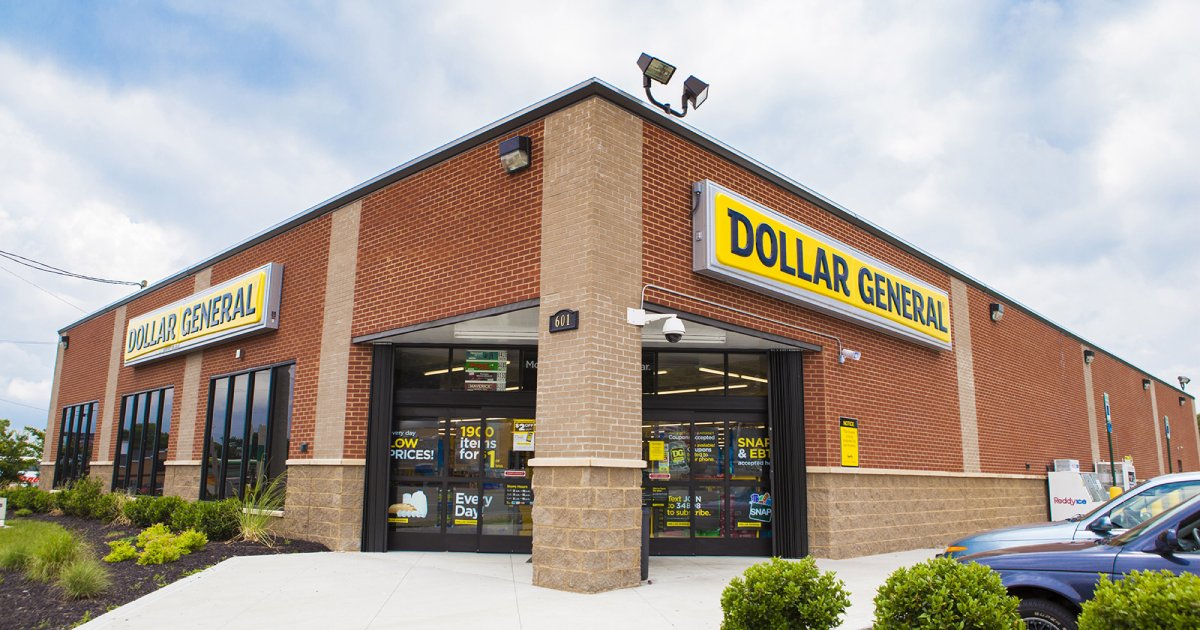
Dollar General, for example, has 2,000 items priced under $1, including 600 in-store rotating “Value Valley” sections that display a mix of food and general merchandise, including cleaning supplies, over-the-counter medications, and personal care products. In fact, the Value Valley posted a 16% increase in sales in Q2.
The chain also leans on private labels with 3,200 products that it sells under the Clover Valley (food and beverage), Studio Selection (personal care), and other brands. Dollar General has also offered $5 and $10 discounts on products priced at $25 and $40, respectively, UBS analyst Michael Lasser said.
Dollar Tree, meanwhile, used a “small portion” of its $363-million tariff refund to support $1 promotions around the chain’s 40th anniversary. Dollar Tree for many years held firm on the $1 price in its stores before gradually increasing it, starting with $1.25 in 2021. It has since expanded to a multi-price format at 630 of its 5,900 locations across electronics, towels, food, and other items.
“We plan to have an expanded $1 presence in our fall and holiday set in the back half of the year,” Dollar Tree CEO Michael Creedon said. “We know this price point is important to our customers, and we are excited about the opportunity to continue providing tremendous value through these offerings. We’ve taken advantage of the fact that we’re getting that lower tariff rate [12.5% recently compared to 20% a year earlier] and that tariff rate is absorbing inflation and helping us to maintain value across key categories. We think that’s helping our store traffic.”
In other cases, discount retailers are revamping sections of their stores to meet shifts in consumer demand.
Ollie’s, for example, is replacing wall-to-wall carpets in its stores with furniture, although the latter category is unlikely to account for more than 1% of annual sales, van der Valk said. Ollie’s is also reducing its selection of books. Dollar General, meanwhile, is undergoing “rationalization” across some product categories and is taking more items out of “less productive” stores, CEO Todd Vasos said.
“It is the everyday low price that brings the customers in and keeps them sticky,” Vasos said. “We are at as good price today as we’ve been against all classes of trade. It just takes customers longer to realize you have lowered an everyday price.”