




Niche Brands Take a Seat at the Table
By Mark Seavy
Tabletop suppliers are targeting licensing for niche brands as they battle to offset tariff-related price increases and tighter retail assortments.
For suppliers at the Tabletop Association’s recent New York Tabletop Show, that meant keeping a more targeted customer in mind.
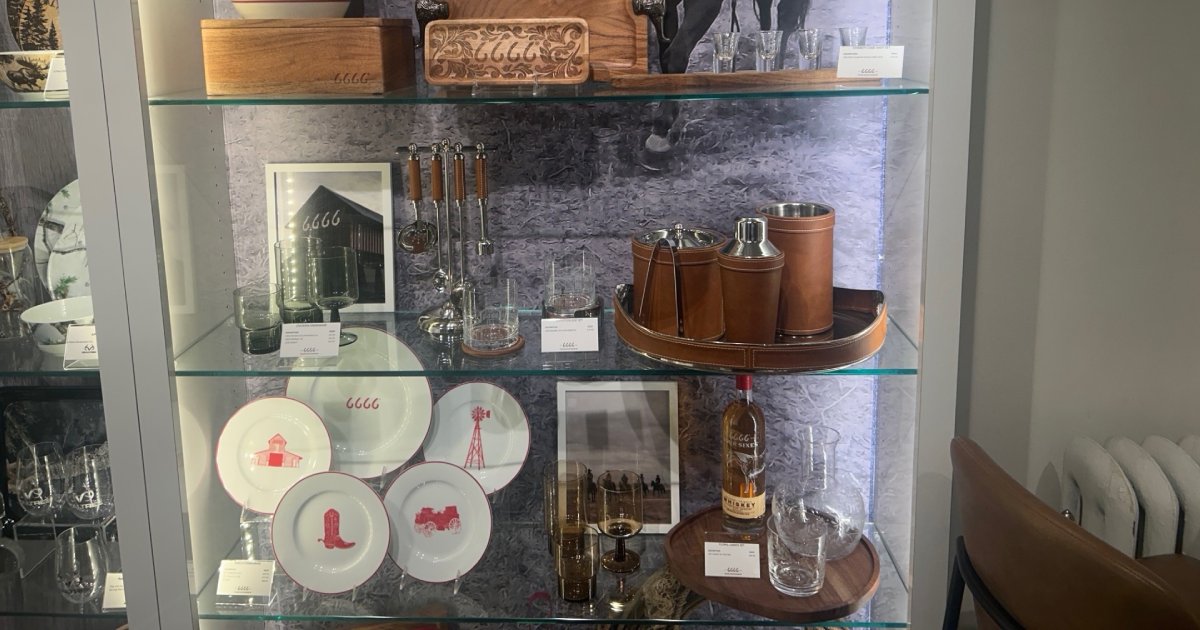
Lifetime Brands, for example, launched dinnerware (dinner plates, shot glasses, trays) under the “6666” brand, an homage both to the upcoming spinoff of the Yellowstone streaming series and the Four Sixes Ranch (a functioning ranch in Texas) that served as the show’s home base.
At the same time, Lifetime is launching 60-piece line using Realtrees’ licensed camouflage designs (ceramic and melamine glasses, cups, saucers, dinner plates). Lifetime previously was a licensee of camouflage design company Mossy Oak.
The company is also expanding its line with Dolly Parton (glassware, mugs), an assortment that generated $18 million in revenue in 2025, largely from sales through Dollar General. Lifetime also showed a 60-piece dinnerware collection under license with chef Jamie Oliver, an extension of the “Big Love” collection that started with serveware in 2024.
Villeroy & Boch, meanwhile, unveiled a Disney-licensed collection for the European market that will feature Mickey and Minnie with designs across 26 products ranging from a four-piece breakfast set (coffee cups, saucer, bowl, and dessert plate at $91) to a three-ounce espresso cup and saucer ($16). The line was built from the Manufacture dinnerware collection, which launched in 2021 and ranges up to $488 for a 12-piece dinnerware set.
Noritake extended its licensed Frank Lloyd Wright collection (creamers, tea pots) that features both his designs (Frank Lloyd Wright Signature) and magazine graphics (Frank Lloyd Wright Foundation). It also unveiled a premium Imperial Peacock line that ranges from a 4.25-inch round plate ($45 wholesale; $90 retail) to a six-piece assorted set ($400 wholesale; $800 retail). Noritake has been a licensee in Japan since the opening of the Frank Lloyd Wright-designed Imperial Hotel in Tokyo in 1923, but only recently began entering the U.S. market.
On the hospitality side, Noritake is also seeking to supply another Frank Lloyd Wright-influenced hotel—the Biltmore in Scottsdale, AZ—which is located a short distance from the foundation’s headquarters, said Jay Fingert, Senior VP of Noritake’s Tabletop Division.
“There is a change in the U.S. and dinnerware is much more important and trending up, but it is much more casual,” said David Mackrell, President of Lifetime’s Dinnerware Division. “Dinnerware is an emotional purchase more so than a gadget or flatware, which are commodity goods. When consumers go to buy dinnerware, they need to love it first, then they look at the quality, and then its brand and price. It is more of a lifestyle and a curated look, and it is niche for a certain customer. It is being more design-driven to what the consumer is at retail.”
That philosophy is also extending across a consumer preference for vintage designs featuring florals and dinnerware that can be multi-functional, including a breakfast bowl that can also serve desert or salad, tabletop executives said.
“Many companies are scrambling to develop cleaner designs for Gen Z and yet vintage is popular,” said Linda O’Donnell, Design Director at Certified International. “Before that hit we were trying to figure out how to appeal to the younger customer. Up until recently I was seeking fresher designs, yet we are going back to vintage.”
Amid these trends, tariffs and global conflict are weighing on the tabletop business. Noritake, which manufactures its premium products in Japan but has also had a factory in Sri Lanka since 1973, imposed its first prices increases on March 1, Fingert said. Also of concern are shortages of oil, which is used for the natural gas that powers kilns needed to produce pottery for plates and bowls, he said.
Zrike Brands, meanwhile, relies heavily on factories in China but recently moved some dinnerware production to Corona Industrial’s porcelain plant in Colombia, a facility it last used 15 years ago, Zrike CEO David Zrike said. The company also issued wholesale price increases last year, but anything further could cost business, Zrike said.
“We have reached a point now where, if we raise prices any further, we risk losing not only retailers, but also consumers who likely would have to absorb the cost,” he said.